
Newsletter December 2025
La belle Cécile est partie
My mother Cécile Désalliers died in Verdun (Montréal) on November 7. I wanted to write this last month but I couldn’t. It’s been a few weeks, and tears well up whenever I think of her. My beautiful, kind maman is gone forever. I’m sad.
“Did she suffer?” Mercifully, no. Thank the goddesses for opiates. “How old was she?” 91 years old. “She was lucky she had a long life.” That’s true, although the last few years were not easy. Some will just nod back: “Oh okay, that’s old enough, it was time she went.” It lands awkwardly, even though I’d had those exact thoughts myself as I watched her sink into “the night,” as writer Annie Ernaux described Alzheimer’s. It’s never time for anyone to go. Oh, correction: some people should definitely go posthaste. But not Cécile.
“Were you able to be with her?” Yes, until the end. My sisters and I took turns the last week. Maman was completely unconscious, although she opened her eyes once in a while. But her bright blue eyes were dark. I looked at her: this is the body that carried me and gave birth to me. I put my hand on her chest. When I had severe asthma and multiple bouts of bronchitis as a child, maman sat by my bedside many nights, and sometimes slept next to me, so worried was she that I might not make it. She homeschooled me when I couldn’t leave the house. I was her firstborn and she’d be damned if I wasn’t going to make it.
In the days after maman died, I re-read Ernaux’s Une Femme, her tender but unsparing tribute to her mother. « Il me semble maintenant que j’écris sur ma mère pour, à mon tour, la mettre au monde. » (I'm now writing about my mother because it is my turn to give birth to her)
We knew the inevitable was coming, especially after maman broke her pelvis once again in June this year. She had broken it a first time in 2022, so we knew the drill. Ambulance, stint in the corridor of the hospital emergency room, weeks-long hospitalization with the loss of function that results, transfer to an acute care nursing home. While she'd been determined to go to re-hab in 2022, this time she wasn’t. “I’m tired,” she repeated whenever we tried to get her to stand up once the fracture had healed (and it had healed, again, incredibly). Nope! She was 91 and she was tired.
Cécile had been diagnosed with Alzheimer’s in 2019 and had steadily and rapidly declined. Some people deteriorate very slowly. Not her. She lost her short-term memory early on, then the long-term went too. She’d begin a sentence and stop, looking at me… searching for what she'd wanted to say, and that I could almost but not quite guess. Did she want to talk about her father, a schoolteacher who had built the house where she grew up in Verdun, a working class neighborhood in Montréal? About her mother, my beloved godmother Jeanne, who had left a religious order before taking her final vows, causing her own mother to disown her? The thought was gone.
Cécile then stopped asking us any questions. This silence came after a period when she’d ask the same questions repeatedly: “Where is your purse? What day is it?” I missed that, strangely. But she would often say with a big smile: “Thank you for coming to see me.” Oh maman, of course we’re coming to see you! She might have realized that some people in the facility never had any visitors.
Cécile recognized me almost until the end, although in the last few months, it took her sometimes a good 20 minutes to finally be able to say my name. When she last saw my husband David in October, she told him: “I don’t know you, but I know I can trust you.” She couldn’t hold a conversation, but she beamed when we arrived, always happy to see us, these strangers she trusted.
She stopped eating and drinking in late October. She gradually forgot how to. Alzheimer’s eventually attacks all the basic functions, like swallowing food or drinking with a straw. She developed pneumonia. This was the phone call we all dread. I flew to Montréal to be with her and my sisters.
She was not angry or hostile as an Alzheimer’s patient. Always gentle. The staff of the nursing facilities where she spent the last three years of her life loved her. We were fortunate that way too. She did, however, escape the first facility twice, each time to go “home” to have dinner with Jeanne. The second time she ran away, Cécile was with a woman she’d befriended across the hall: Thelma and Louise even got on a city bus before the driver realized they had no money and no transit pass and let them off at the next stop. Each time, my sister who lived close by had to run to the ER or contact the police as they looked for maman wandering the streets. Funny, not funny!
The day Cécile died, one of my sisters held her hand while I cradled her shoulder and neck. We watched her breathe more and more shallowly, stopping for several seconds and starting again. Then I couldn’t feel her heartbeat anymore. She let out a long exhale. The last gasp, le dernier souffle, literally. The end. After a while, we walked over to tell the nursing staff.
I never imagined I would witness my mother’s death. It’s something one doesn’t want to imagine—unless perhaps one’s mother is a terrible person. I also hadn’t known how I would react. When my father Pierre died, I was sad and shaken, but I didn’t cry much. When Cécile died, I sobbed, and I am still sobbing. So many tears. “Je la pleure,” we say in French: “I am weeping over her,” in other words, I am mourning her. But mourning sounds like a much more introverted, restrained state. “Pleurer” a dead person, is active, it involves tears, public tears even. It’s a grief I’ve never experienced. “She will never again be anywhere on earth,” Ernaux wrote in Une Femme. A total absence.
I have to write about maman. There are specific moments I want remembered.
When Cécile drove me from Québec City to McGill University as I began my studies there, we took a walk around the leafy campus. On a wall near the McLennan library, a quote by 17th century English writer John Milton is engraved: “In the quiet and still air of delightful studies…” As she looked at the inscription, maman told me she had wanted to study chemistry, like Marie Curie. She was wistful, I could tell. Not envious or bitter, on the contrary: happy and uplifted I could go to university when she hadn’t been able to.
At the time, her parents were saving for her two younger brothers to go to university, which was expensive in those days in Québec. Boys had priority, no question. So Cécile chose teaching, one of the only professional careers open to her. My grandmother Jeanne insisted, however, that my grandfather Rosaire pay for Cécile to enroll at the Institut pédagogique for a two-year, higher-level teaching diploma, a “brevet." The alternative was a simple high school teaching certificate. Jeanne, who had herself been a schoolteacher, had heard a university degree would soon be required to teach, and she wanted her daughter to have a leg up. Needless to say, Cécile excelled in her studies. Jeanne also made sure Cécile obtained her teaching brevet for piano. “You need more than one string on your bow,” she’d tell her daughter, who often repeated that aphorism. (Her brothers, oh surprise, weren’t interested in delightful studies).

Perhaps that’s why, at the end of her life, it was her own mother whom Cécile most talked about and wanted to see. Not her late husband Pierre, my father, as much as she had loved him. Cécile was only 38 when Jeanne succumbed to heart disease and diabetes. Jeanne and Rosaire had been the anchors of their neighborhood, with their back door always open and a stream of neighbors dropping by for tea, pie and news. As a girl, I loved sitting in Jeanne’s big rocking chair in the kitchen watching it all unfold.
Cécile taught primary school in Verdun, including third grade to 40 boys! She directed the school choir and gave piano lessons. She was still living with her parents when she was introduced to the dashing Pierre Girard at a party. It was love at first sight, they told us. Their courtship was chaperoned by Pierre's sister Denise and by Jeanne. Pierre and Cécile would sit on a sofa in her parents’ living room, which literally opened onto her parents’ bedroom. When it got to be too late, Jeanne would clear her throat loudly in bed. “There were not many opportunities for anything to happen!” Cécile would tell us with a chuckle.
Cécile and Pierre were both sociable and ready for new horizons, and in this, they were well matched. She wasn’t fragile—she had had spent her childhood summers in a cabin without electricity on a lake close to her father’s birthplace in rural Québec, swimming, fishing and canoeing with her brothers. She was always proud of the farmers and beekeepers in her father’s family and visited them regularly. We had Désalliers honey at home our entire life. Pierre had also grown up with a deep connection to the land, with his father keeping a small farm nearby and putting his ten children to work in the gardens and the barns.
She married Pierre in December 1958 (on an intensely cold day, she’d always note) so she could join him in Sept-Iles, where he’d been sent to open a branch of Hewitt Equipement, the Caterpillar dealer for the province of Québec. This was the time when large hydro-electric dams, iron ore mines in Labrador and the DEW line (the anti-Soviet radar built jointly in the Arctic by the U.S. and Canada, in the days when we aligned on foreign policy) were being built. But first, they went to Mexico City and Acapulco for their honeymoon, a completely unusual choice for Québec newlyweds of modest means. The adventure was beginning.

Sept-Iles is 900 km (560 miles) from Montréal on the North Shore of the St. Lawrence River. It’s a 14-hour drive, with a ferry across the Saguenay River. In winter, the tortuous 138 highway was (and still is) treacherous. In 1958, there were about 12,000 people living in and around Sept-Iles, many of them (First Nation) Innus. In the fall, my father and his friends would go moose and deer hunting on Anticosti Island, and the women would join them for salmon and trout fishing on remote lakes and rivers reachable only by float plane. I was born in a converted barrack of the Iron Ore company that served as a makeshift hospital before the real thing was built. Three more kids quickly followed. It was a change of scene from Montréal, to say the least.
When she got married, Cécile had been informed by the Verdun school board that she could no longer teach, because married women... couldn’t teach. Hearing that as a girl made me quite weary about marriage, needless to say. But when she arrived in Sept-Iles, she could teach after all, because they badly needed teachers. She got pregnant almost right away, however, and of course pregnant women couldn’t teach. That was the end of her teaching career.
Being so far away from her parents was hard but also something of a godsend, she told me later, because it put a safe distance between my father’s large family, which meddled in other people’s business, and her own household.
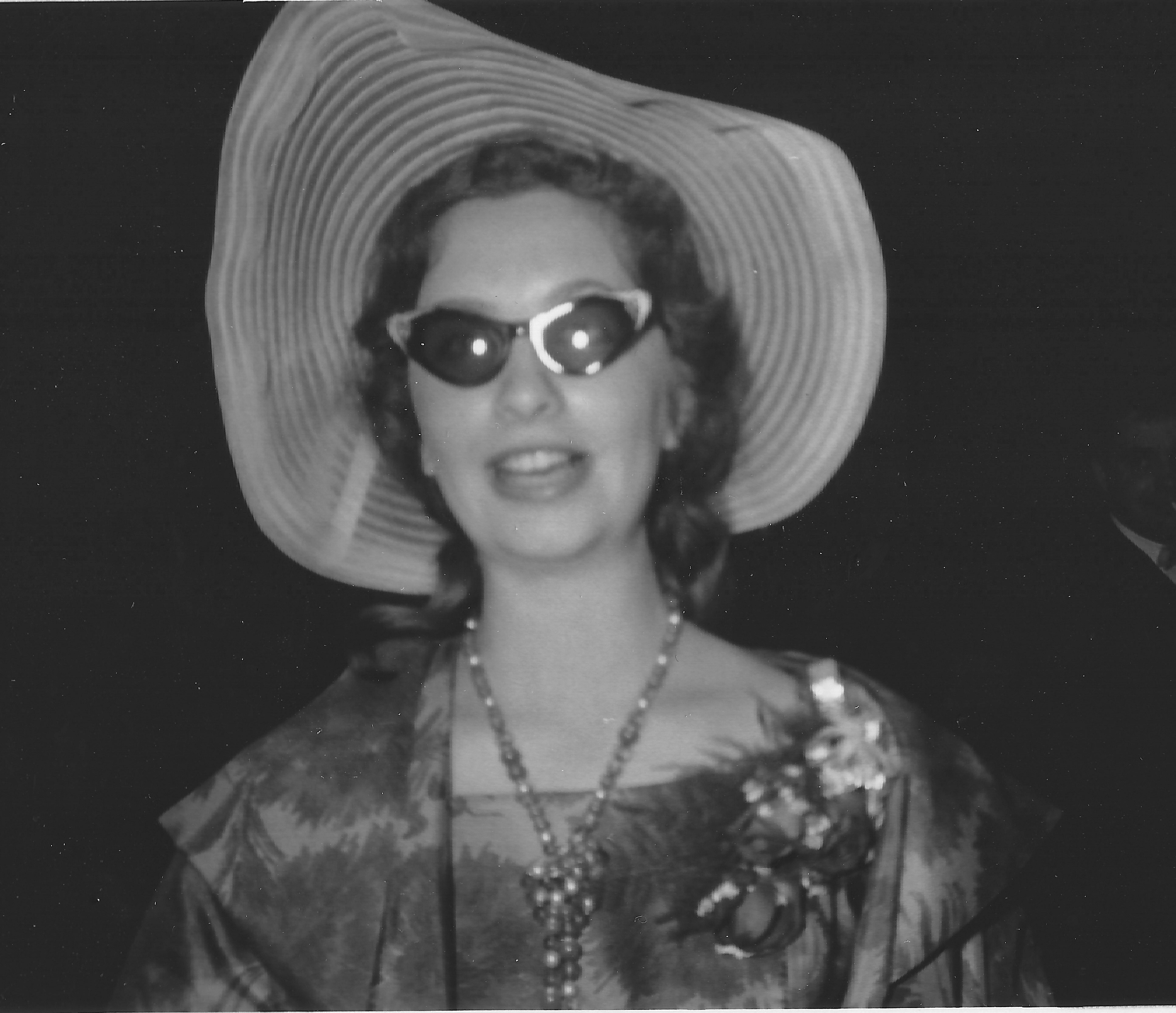
Pierre was a gregarious and charming man, a successful businessman always interested in politics and current affairs, but he was demanding and saw himself as the sole decision-maker. He was in essence an old-style patriarch, though I think he considered himself a modern man. Cécile had to cope. My parents didn’t have a joint bank account. Pierre gave Cécile a monthly allowance to run the house, buy groceries, clothing, whatever the children needed. She had a tight budget but never mentioned it. When my sisters and I cleared her last apartment, we found dozens of old notebooks with handwritten accounts and detailed budgets, down to the penny. It was only in my teens that I realized how humiliating that arrangement was. But she didn’t speak about it and didn’t dwell on things that would have enraged me completely.
Yet she had her red lines. When Pierre sold the family home without her agreement, she complained openly. (The house was in his name only). It was one thing to sell when he was being transferred by the company. But at other times, he just got tired of the house we were in and moved us to a different neighborhood. As a result, I attended five different primary schools. Cécile had to pack up and move our household each time, register us in school, reorganize our activities. The last time, she cried for days. And then carried on. When Québec law eventually changed and gave her automatic equal ownership of the family home, she didn’t block the final sale, but she put her half of the proceeds in her own bank account and told Pierre he couldn’t tap it. At last!
I learned early on that women had to earn their own money and remain economically independent. It wasn’t just in case your husband divorced you, which didn’t happen to Cécile. It was to have negotiating power throughout marriage. My sisters and I worked our whole lives. No trad wife nonsense for us.
Cécile was beautiful but never flaunted her beauty. Pierre would comment on her weight gain even though she’d had four children in a span of five years and was never, objectively speaking, fat. He loved her and often brought her flowers, but he didn’t compliment her often. She was always elegant and stylish in an understated manner, although she had no money of her own until she started working again in her fifties. She had to negotiate with Pierre to buy clothing, even though they went out regularly to business events where he expected her to look the part. Like many women of her generation, Cécile had chosen to “keep the peace,” to put up and shut up, even though she had a lively personality and plenty of self-confidence. When Pierre was dying, he suddenly turned to her one day: “You know, you were the love of my life.” She broke down. She told me she realized at that moment how much it would have meant if he’d said it to her earlier.
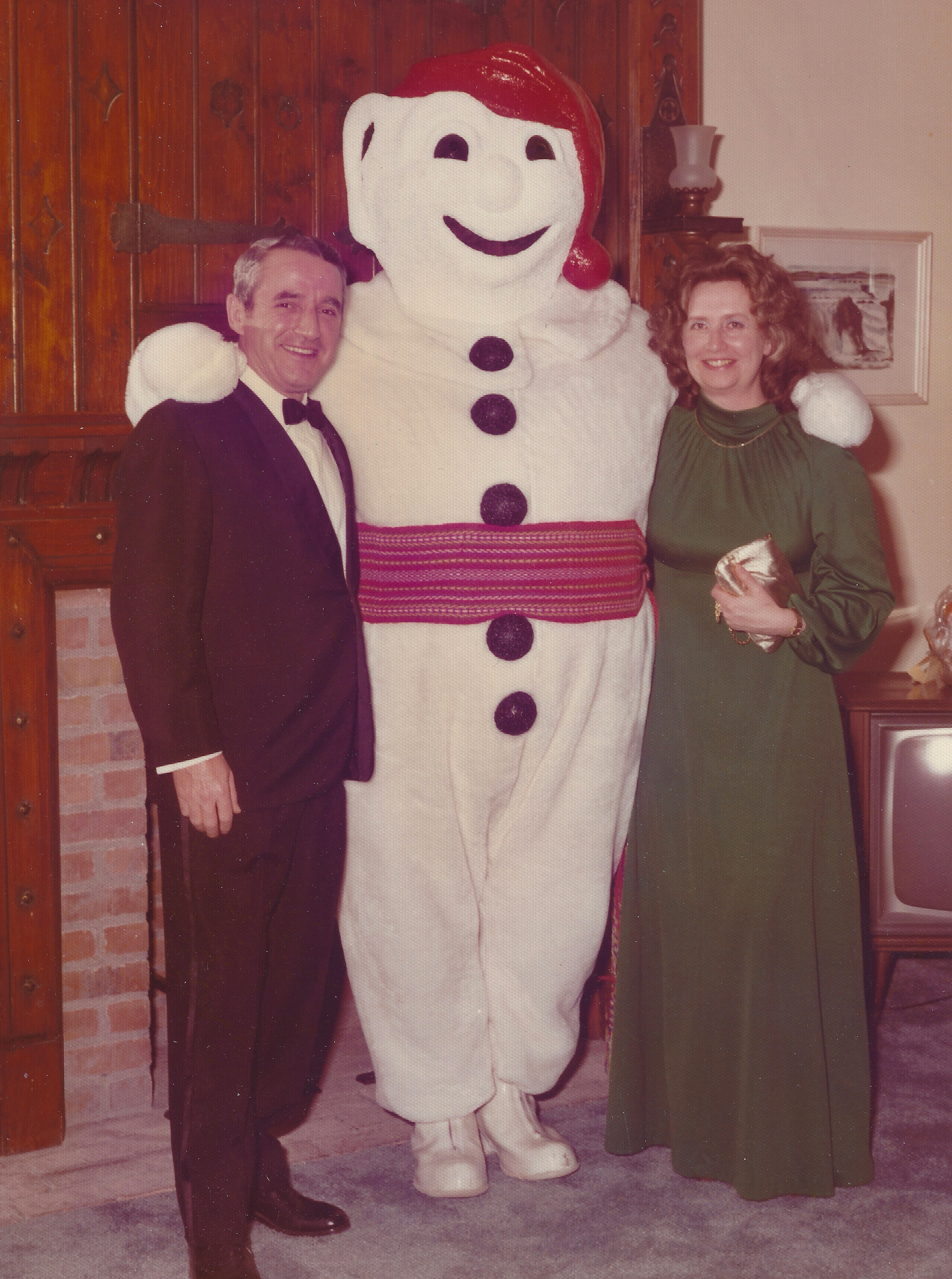
We had a lot of fun with maman as kids. She was full of energy, funny and curious about the world. She organized arts and crafts on cold days and we sang traditional French songs with her on the piano. We regularly cracked open the dictionary and encyclopedia at the dinner table to settle arguments. She took us ice skating, drove us to ballet classes (the three sisters) and little league ice hockey matches (the younger brother). There wasn’t a museum or historical monument we didn’t visit. We piled into her white Renault 5 or yellow Pinto (no seatbelts!), the only condition being that we couldn’t fight in the car. When we moved briefly back to Montréal at the time of Expo67, Cécile decided I was old enough at seven to accompany her all summer as we visited country pavilions from Ethiopia to the USSR to Iran.
In our second house in Québec City, kids from all over the neighborhood would ring the doorbell and ask if they could swim in our backyard pool, a rarity at the time. We were in the water all summer with our friends and Gamin, maman's slightly zany grey poodle. Cécile was particularly welcoming of young people. When we had teenage dance parties in the basement, she always sat at the kitchen table keeping an eye on the goings on. No beer allowed! Our boyfriends would drift upstairs to chat with her over a cup of strong coffee.
Maman wasn’t excited about the farm Pierre bought in Val-Alain, a village an hour from Québec City. He had always dreamed of a return to the land. She knew how much work was involved. But along with it she went, keeping chickens, the rapidly multiplying rabbits (they eventually sold them all to a French restaurant) and a cow, and putting all of us to work in the endless vegetable gardens. She and Pierre canned and pickled untold numbers of tomatoes, beets and cucumbers. Thankfully, that Green Acres episode also involved good moments—in summer, there were long lunches outdoors with relatives and friends sharing boiled sweet corn drenched in salt and butter, the famous “épluchettes de blé d’inde” (shucking of “Indian wheat,” the common name for corn in Québec).
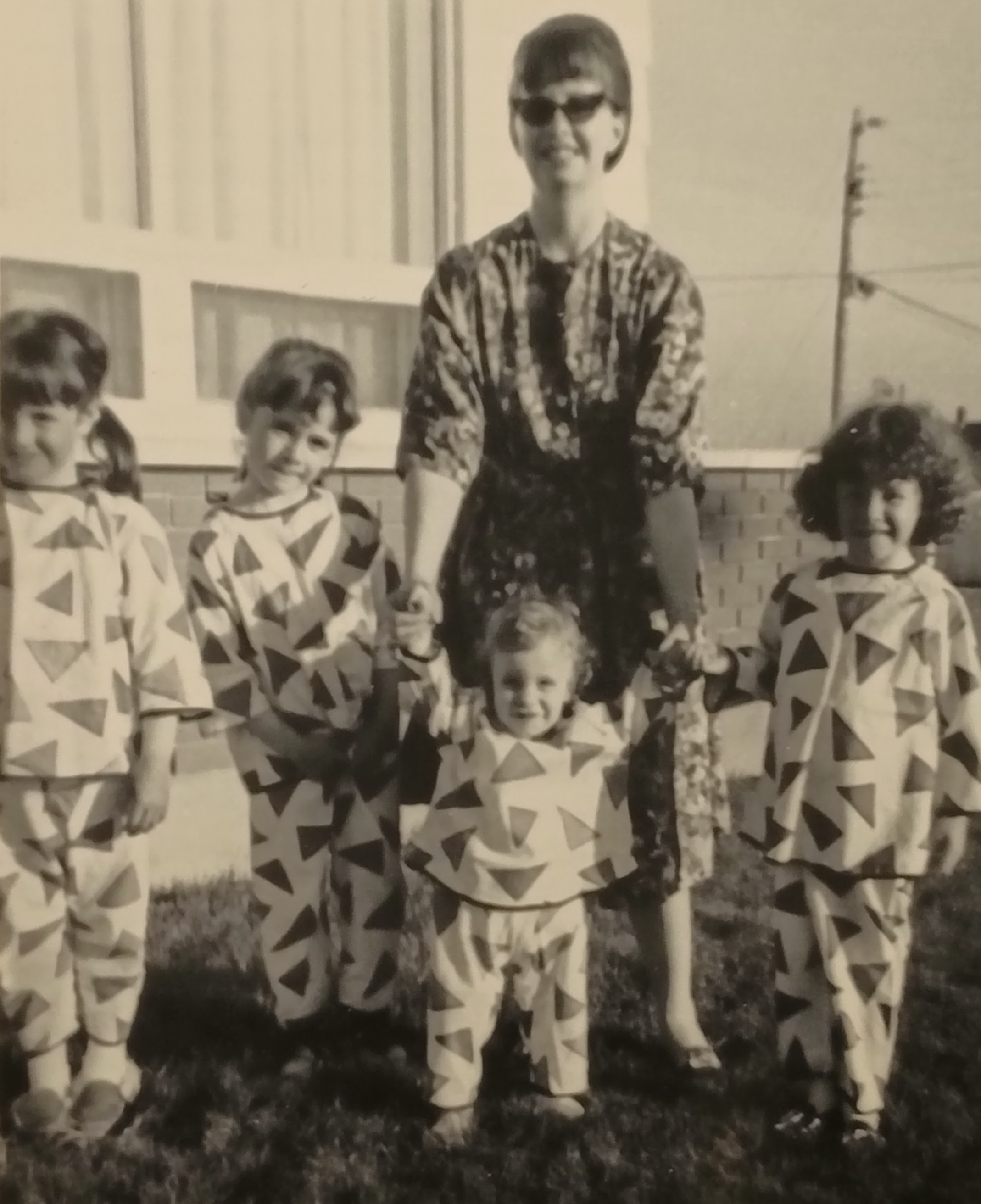
Unsurprisingly, given her traditional Catholic upbringing, Cécile was very conventional in matters of sexuality. She’d warn us girls about boys taking advantage of us, and our grandmother Jeanne upped the ante with gruesome tales of girls getting raped and murdered while hitchhiking. Never accept any candy or gum from men! You can’t go camping with a mixed group! Don’t accept a ride from a stranger! My brother was of course spared these warnings or restrictions.
It was over these topics (and basically only those) that she and I clashed. As the eldest, I was first in line to have those arguments with her. When I became fed up with the mess of sanitary pads and wanted to use tampons, she had a fit, saying in essence that I'd no longer be a virgin if I used them. I was 14 and thought that was ridiculous. I had seen Tampax ads in magazines and I wanted to be able to swim anytime. But what could I say? I hadn’t developed a critique of virginity at that point. I replied that sex was with men and not with tampons (partly true but not the strongest point), and I even ventured that if a man wouldn’t marry me because I’d already had sex, then it was his loss (better argument). I was shaken, but she relented. At 17, I didn’t ask maman for permission to use the contraceptive pill. When I came face to face with her in the pharmacy (she had a sixth sense, for sure!), I thought I’d faint but I told her. She was upset I was having sex, but I reminded her she'd always said we shouldn’t come home pregnant. Hard to argue with that! In retrospect, how I wish we’d had comprehensive sexuality education in school and open conversations at home. Later on, she’d talk much more freely about sexuality, telling me how she and Pierre had decided to use condoms after my brother was born and that she and Pierre had an active and enjoyable sex life. The Catholic Church’s grip on them had slipped, though they continued to go to church until the end of their lives.
When it came to learning and travel, Cécile’s open mind overcame those potential fears for her daughters’ safety: my parents allowed me to go to Belgium for a month at 14 to stay with a pen pal, Sophie, whom I had never met in person. They were supportive when I won a scholarship to study at an international school in the UK, Atlantic College, at 17. She never expressed reservations about my leaving home.
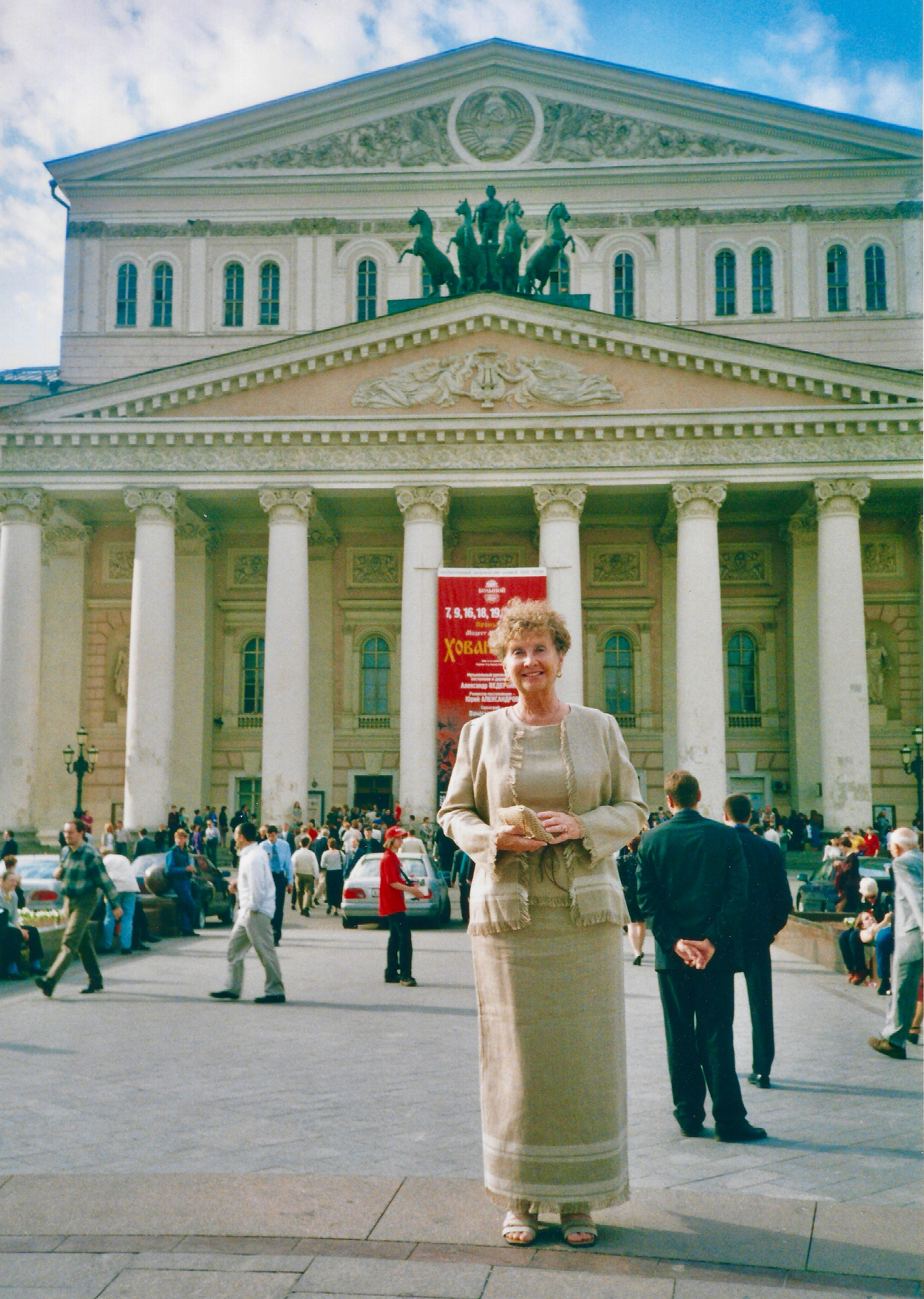
Cécile loved Russian literature and music. When as an adult, I asked her where I could take her on a trip, she asked to go to Russia. Off to Moscow and St. Petersburg we went, with a side visit to Tolstoy’s estate at Yasnaya Polyana. She had specific requests: the apartments of Scriabine and of Dostoevsky, and the Hay Market in St. Petersburg where Crime and Punishment’s Raskolnikov confesses his crimes! We saw an opera or ballet every night at the Mariinsky or the Bolshoi and had ice cold vodka shots, the only drink she occasionally enjoyed, at the hotel’s caviar bar. A perfect trip.
When Pierre retired, they volunteered several months for the Chamber of Commerce of Abidjan, in Côte d’Ivoire, to help them develop a strategic and business plan. They then left on a three-year trip through Canada and the U.S. in a motor home. She wasn’t keen to go on such a long driving trip given Pierre’s questionable health (and he did have a heart attack in Texas, resulting in a stent). But she soldiered on, eventually finding much to enjoy, and writing detailed diaries of all they saw. Towards the end of their lives, Pierre and Cécile spent five Canadian winters in Uruguay, where they both learned to speak Spanish and traveled around South America. That was more to her liking! Cécile was especially taken with Buenos Aires, which made her feel as though she was back in 1950s Montréal.
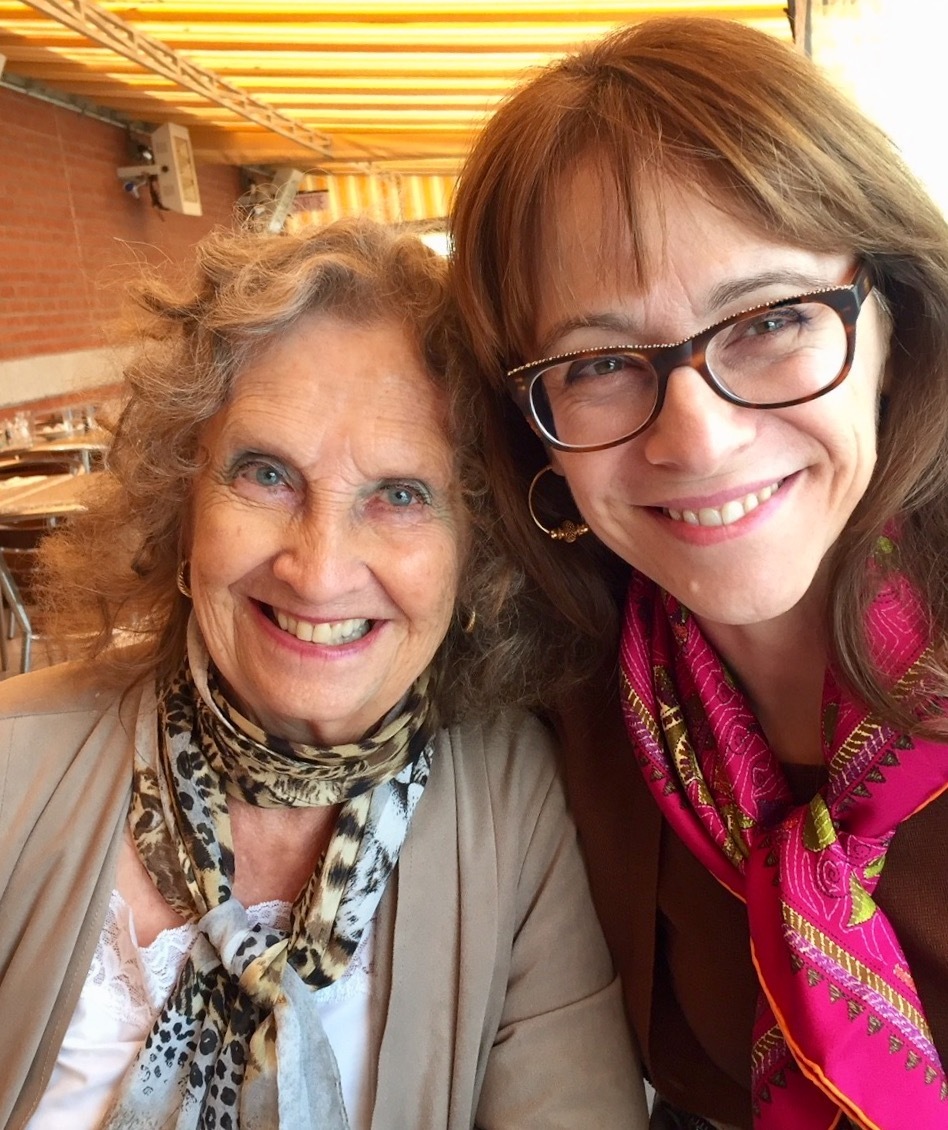
Some parents can be tyrannical, and some are downright abusive. In Une Femme, Ernaux portrays her mother as violent, loud and excessively demonstrative. That overwhelming, sometime brutal nature made it harder to relate to her, even though Ernaux still loved her profoundly. Cécile was not like that. She had a lightness about her and sought harmony. Once, when my brother particularly misbehaved, she grabbed a 36-inch wooden ruler she used for sewing and gestured as if to hit him with it. But it snapped in two on the edge of the kitchen table, and we all collapsed in laughter, Cécile included. The tale of the “36-inch ruler” remained legendary.
Maman was respectful of her children, never meddling, never searching our belongings or rooms, never pressing us to marry, to have kids or even to live close by. She loved us unconditionally, and was there for us though illness, divorce, money troubles and other tribulations, no questions asked. I don’t remember her badmouthing anyone, even though she’d sometimes express careful reservations about some people. I now realize how exceptional she was, and how easy it was to love her. Her father-in-law, the austere Camille Girard, once told Cécile: “Vous, madame, auriez pu être reine.” (You, madam, could have been a queen). Indeed!
She kept up with her friends all her life, and for many years, organized the alumni reunions of the Institut pédagogique. As one of my sisters said in her eulogy, Cécile was like a sunflower, turned towards love, friendship and care. At the funeral home, a few of her remaining elderly friends came, but most were our Girard first cousins and their children, about thirty of them. She had that effect on young people.
Jean Cocteau wrote: « Le vrai tombeau des morts, c’est le cœur des vivants. » Where the dead truly rest, is in the hearts of the living. The memories are what we have now. Merci maman.
In love and solidarity to all of us who’ve lost their mother,
FG
---------------
PS. I’d be remiss if I didn’t mention the incredible staff at the Centre d’hébergement et de soins longue durée (CHSLD) (long-term care and residential center) Réal-Morel, in Verdun, who took care of maman in the last months of her life. We couldn’t have asked for a more professional, attentive and compassionate care team. When I read tales of horror about elder care in the U.S. and elsewhere, I appreciate how incredibly fortunate we were to benefit from the state-run and state-funded elder care offered by Québec, which involves minimal paperwork and costs very little.
It’s therefore infuriating to realize that the care Cécile enjoyed is at risk under persistent attempts by successive Québec governments to defund and privatize the system. It’s also incredibly shocking to watch the current Québec government demonize immigrants and end programs that facilitate immigration. The dedicated, kind team that took such good care of Cécile hails from all over the world. Some of them are second generation immigrants, some first – from Romania, Haiti, Vietnam, Tunisia, Morocco and beyond. Some of them wear the hijab. Quebec’s health and care system could NOT function without these dedicated and caring doctors, nurses and attendants. They should be welcomed with open arms and treated with dignity and respect, rather than scapegoated by demagogues and ethnonationalists.