
Newsletter June 2026
Masculinity: what are we going to do about it?
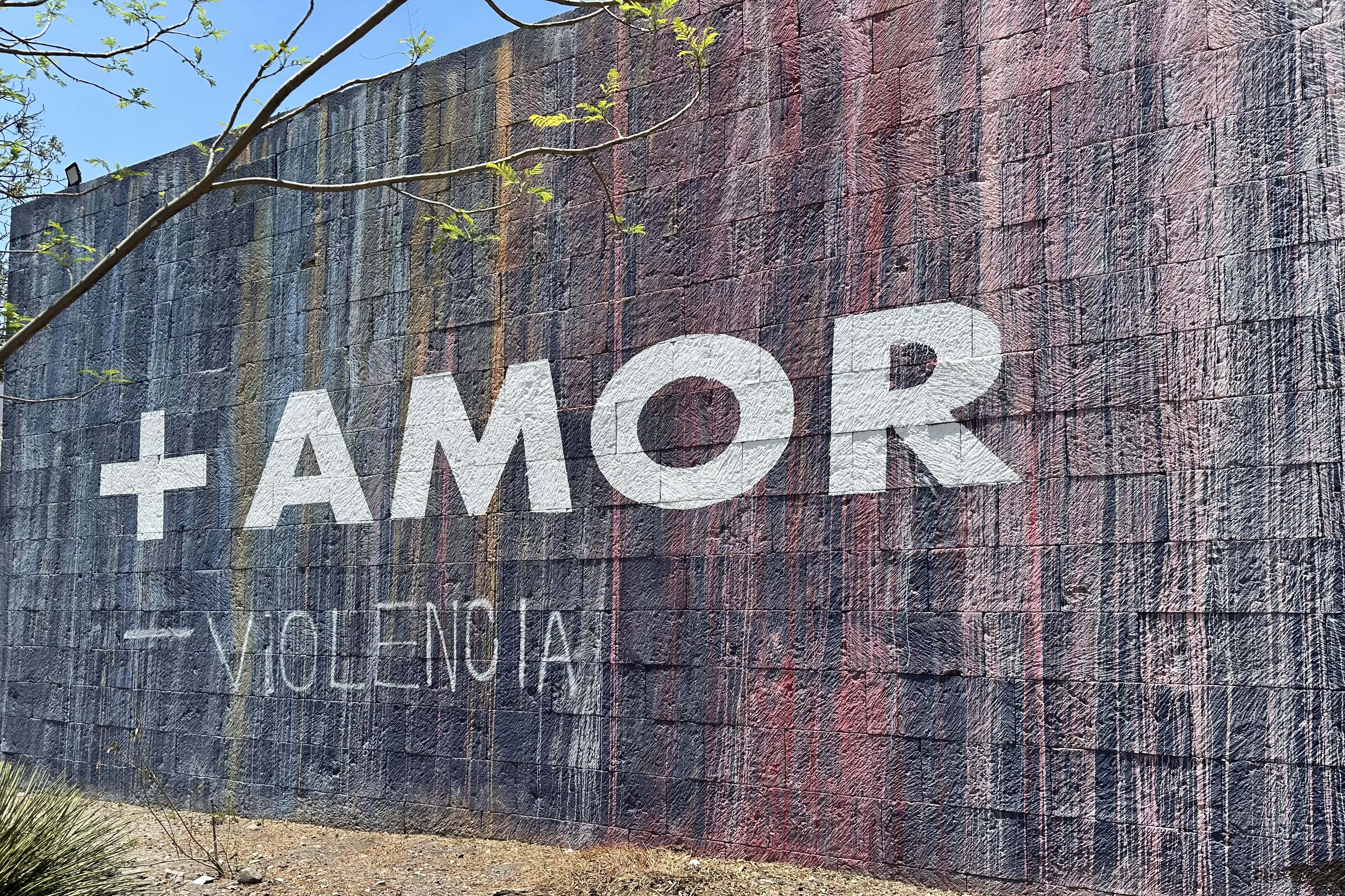
I’ve been thinking and reading about masculinity lately.
In a world where the manosphere pushes violent sexist, homophobic and transphobic ideas on millions of adolescent boys, where our elected officials ridicule care, kindness and empathy and glorify war and weaponry, where the U.S. President hosts mixed martial arts fights on the White House lawn, where women are routinely killed by domestic partners, boyfriends or just random guys, and where an absurd race to riches by a few tech bros is further heating up the planet and using up what’s left of our water, it’s not far-fetched to suggest that “manhood” as it currently exists might be a problem.
But what should we do about it? And by “we,” I’m also asking what men should do about it. Because it’s high time men themselves became involved.
Just as I was starting this Newsletter, yet another man engaged in a deadly shootout, this time, in my former hometown of Montreal. The 25-year-old white man killed two men (a cop and a bystander) before he was shot down. This was awful enough. But the shooter’s 100-page anti-feminist, anti-woman “incel” screed hit me in the gut. I was viscerally reminded of the 1989 Polytechnique massacre, when an anti-feminist man killed 14 women engineering students.
It keeps happening, again and again. In the US, where gun deaths are common, over 98% of all mass shootings are committed by men—young white men in the majority of cases. What can we do to stop this hatred and violence?
Thinking about masculinities… and gender
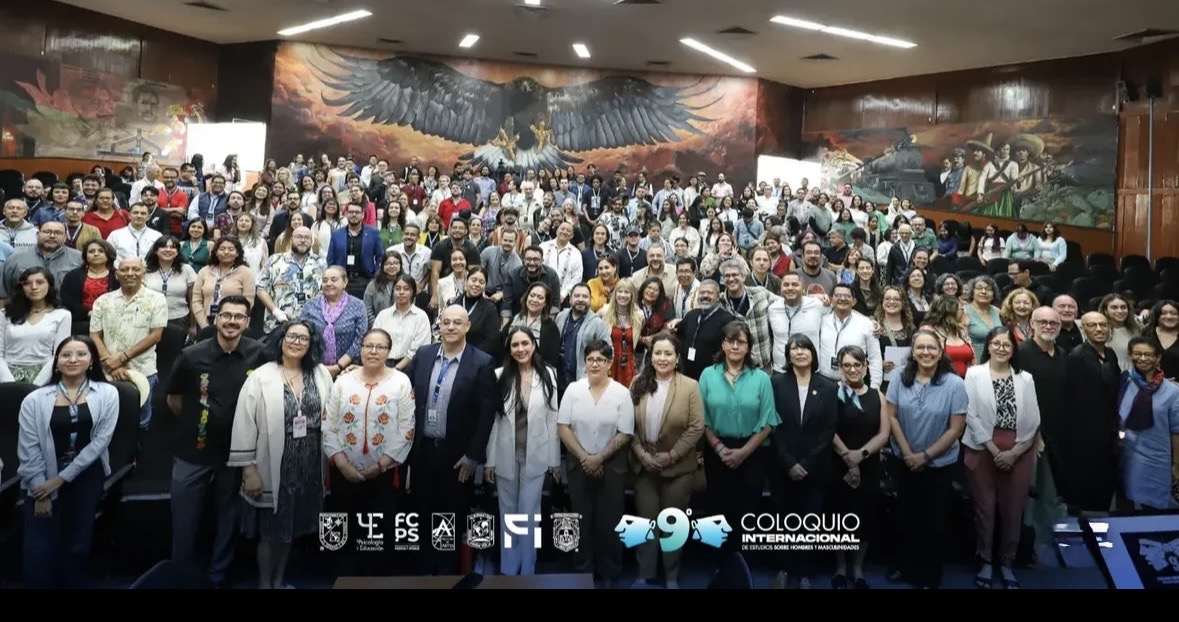
Earlier this spring, in that spirit of inquiry, I participated in a Latin American conference on Studies on Men and Masculinities, on the charming campus of the Autonomous University of Querétaro, in Mexico.
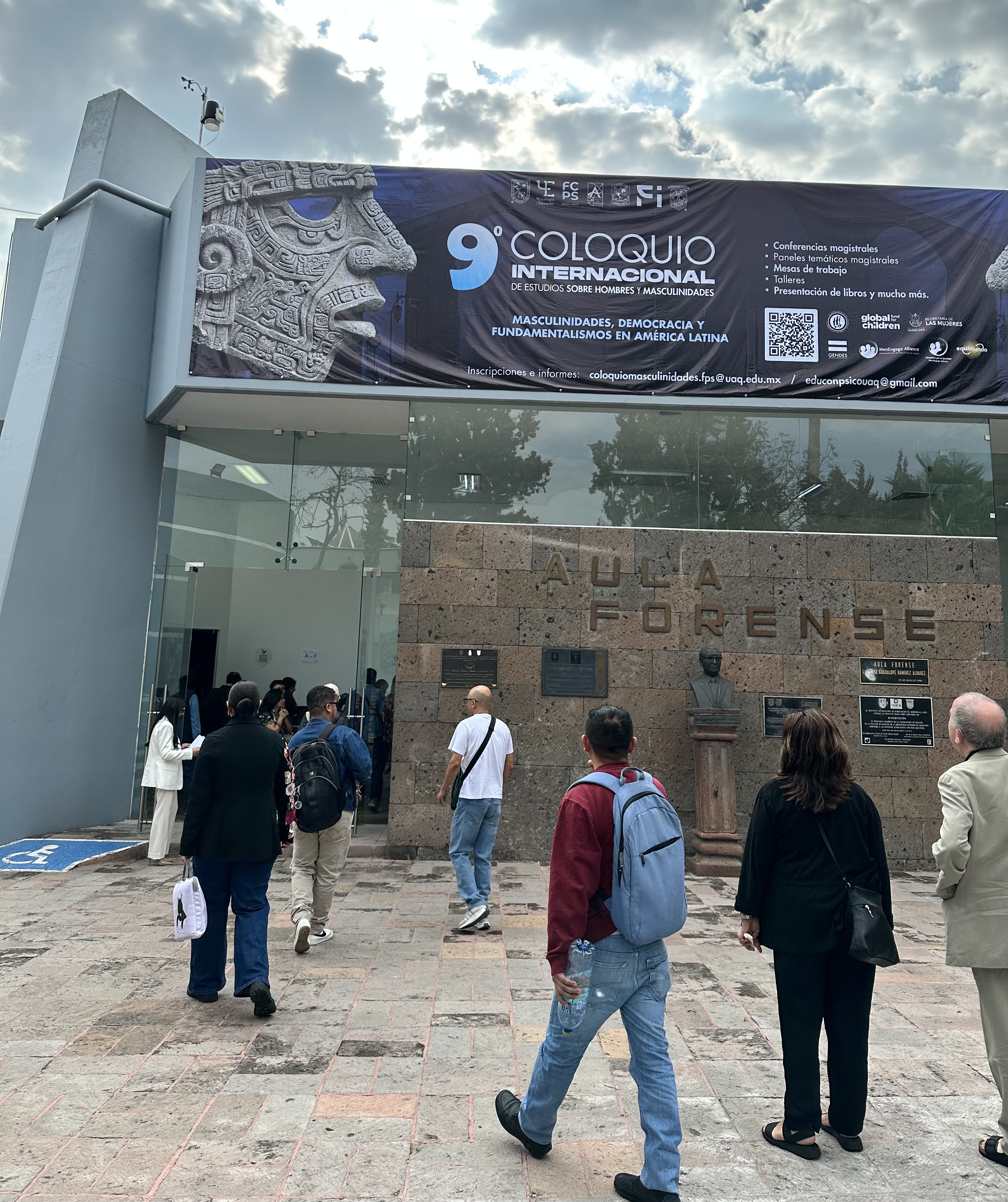
As a feminist, I wanted to understand where the discussion was at, and what was being proposed by men themselves. What were they putting forward as solutions to redefine masculinity away from domination, violence, anger and emotional stunting? How were they thinking about gender? Were they considering the political context in which the very idea of manhood is currently weaponized to attack women, LGBTQ+ persons, marginalized racial or ethnic groups and migrants? Were they thinking about doing away with “masculinity" altogether?
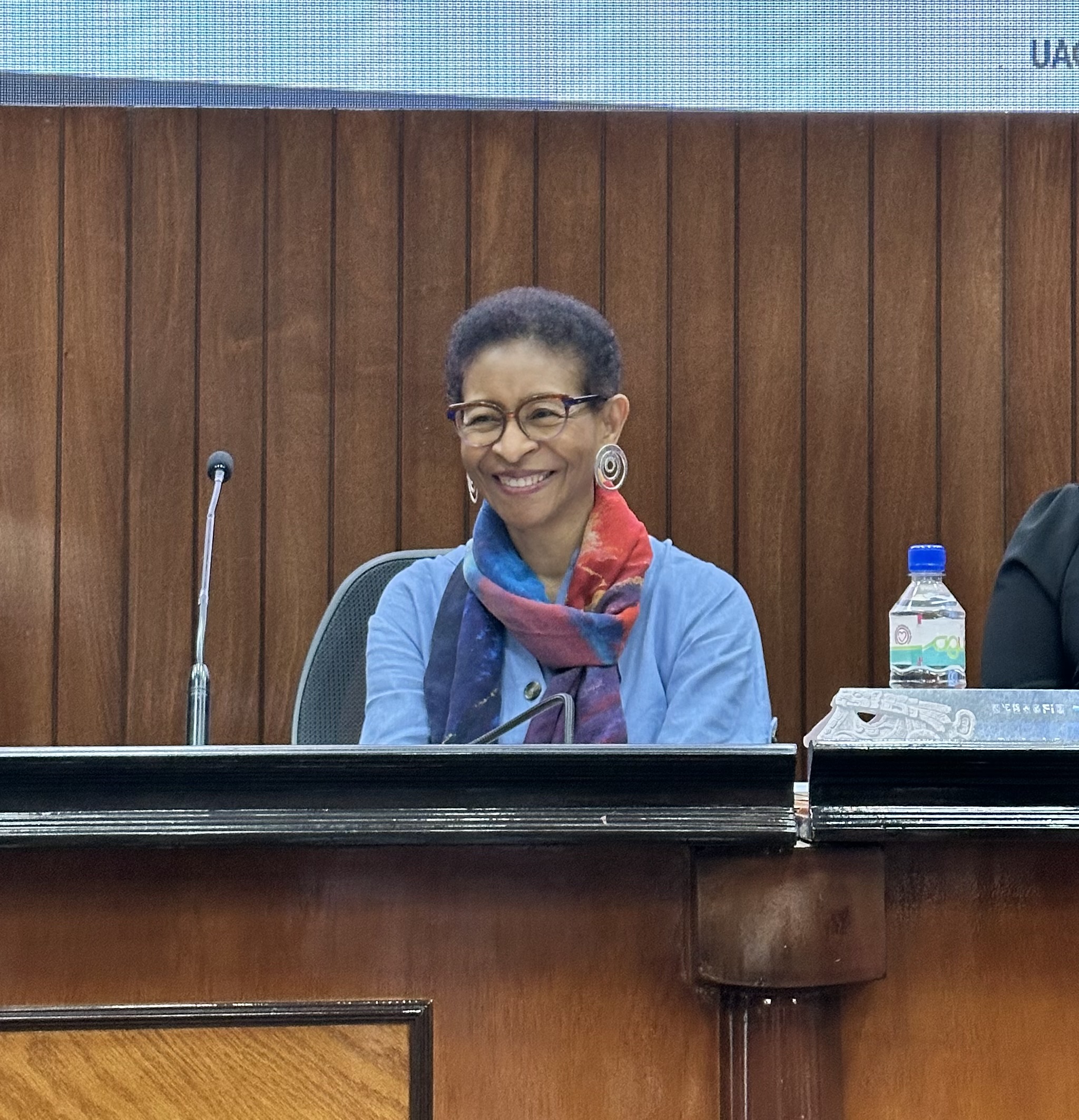
In Querétaro, researchers, activists, elected officials and policy-makers from 26+ countries met over three days to discuss this burning issue. There were significant numbers of women and non-binary people on the program and in the audience—perhaps this shouldn’t have surprised me, since our lives and health on the line! Two longtime feminist friends and celebrated thinkers, writers and advocates, Gloria Careaga (professor emerita of gender studies at UNAM, the National Autonomous University of Mexico) and Sonia Correa (researcher and writer Sexuality Policy Watch, Brazil), as well as another noted feminist thinker, Mara Viveros Vigoya of Colombia, were on the program. Delighted as I was at the prospect of hearing them, I wondered whether this was going to be mostly women and non-binary leading the conversation about masculinities.
Fortunately, there were many men speaking and presenting—taking leadership and grappling with the problem in academia and in their communities. Many gay and trans men, to be precise. Cisgender straight men, seemingly the ones with the most to “lose” from the deconstruction of current gender norms, were less present.
As Canadian historian Erica Fraser has noted in a fascinating review, masculinity studies emerged in the 1980s from gender studies, at first for historical analysis. History was (and is still) largely written from the point of view of men and with assumptions about innate male abilities, identities and roles. Gender-aware masculinity studies challenged that and deconstructed the very idea that men’s historical roles are natural or neutral. As Fraser wrote, these gender-aware historians demonstrated that masculinity “is dynamic and ever changing... what it means to be ‘a man’ is historically specific, in other words, not constant through time and place. Masculinity has not always been linked to military service, for example. It has not always meant physical strength, supporting a wife and children or adhering to certain behaviours that Anglo-American societies might, today, consider ‘masculine’.”
Because of this ever-changing idea of what being a man entails, the field uses the plural masculinities to describe its work.
The brilliant Judith Butler contributed greatly to this understanding of masculinities and gender in a 1988 essay for the Theatre Journal, Performative Acts and Gender Constitution: An Essay in Phenomenology and Feminist Theory. (By the way, how interesting is it that Butler was writing for theater practitioners?!)
Going back to Beauvoir’s central insight that one is not born a woman, but rather, one becomes a woman, Butler argued that gender is not a stable identity, but rather “an identity tenuously constituted in time—an identity instituted through a stylized repetition of acts,” and “the appearance of substance” through conventional clothing, grooming, bodily gestures, movements and actions. Butler noted that performing gender was a requirement in today’s world and a strategy of survival… [and that] those who fail to ‘do their gender right’ are regularly punished.”
That the performance of gender is so easily disturbed and destabilized by anyone who fails to do it “correctly,” and therefore that gender needs to be enforced so constantly and aggressively suggests that, deep down inside, society knows that gender is “socially compelled” and doesn’t reflect an essential biological truth, Butler wrote.
This is a powerful insight. As anthropologist Esther Newton wrote in her 1974 ethnography of drag Mother Camp, all gender expression can perhaps best be understood as a form of drag—some of it normative, some of it transgressive, all of it constantly evolving.
Fraser also cites the fascinating contributions of Jack Halberstam, who made the crucial observation in their 1998 study of tomboys and butch women, Female Masculinity, that “masculinity” can be performed by non-male identifying persons. To that I’d add that female-identifying persons can also use their performance of respectable femininity as cover for traditional, even extreme, “masculine” roles and behaviors. The first woman to become British Prime Minister, Margaret Thatcher, who steadfastly performed femininity with her pearls, purse, sensible suit and coiffed hair, could at the same time unleash acts and discourses of violent imperial conquest during the 1982 Falklands war. Leni Riefenstahl, the attractive female actress and dancer, documented Nazi rallies and the Berlin Olympics as a groundbreaking filmmaker yet escaped prosecution at the end of WWII. The former U.S. Secretary of Homeland Security, Kristy Noem, presided over the rapid build-up of the violent ICE immigration deportation force and its murderous methods while adopting the Mar-a-Lago look of grotesque femininity, an appearance that evokes drag.
Overcoming "emotional incapacitation"
In Querétaro, the conference’s presentations focused on psycho-social support and therapy for men and boys, although Latin American realities shaped some the discussions about masculinities and “machismo,” with issues of class, race and colonialism raised throughout.
Throughout the region, men’s organizations are bringing men together to reflect on their condition. Listening to men discussing their journeys was both heartwarming and sobering, although the work remains fragmented, and still mainly reaches those who are already somewhat enlightened.
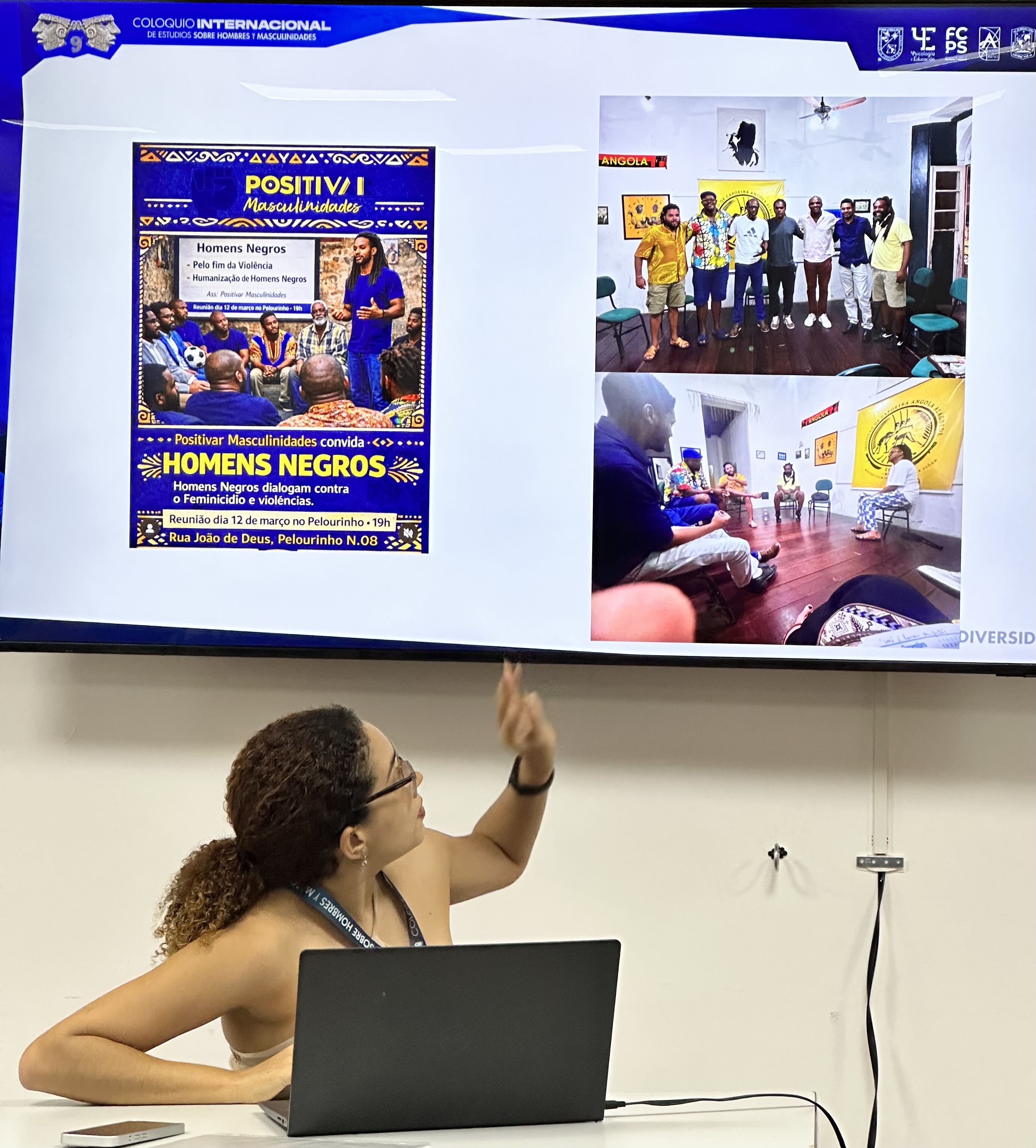
In Salvador de Bahia (Brazil), a Black men’s collective, Positivar masculinidades (“promoting positive masculinities”) has worked since 2019 to answer questions Black men have, and “find answers they didn’t even know they needed,” explained researcher Poliana Jesus de Souza. The collective examines masculinity, but also racism and economic inequality. When asked why men join a group that questions their historical gender privileges, Souza described the conversations as occupying a space "between machismo and racism." Having experienced and reflected on the dehumanization of Black men’s bodies, the members of the group are more willing to examine the dehumanization of non-male bodies.
XRVida, a men’s group in Veracruz (Mexico), began meeting 24 years ago, first to renounce violence, and then to go on to discuss sexuality, well-being, health and more. Their partnership with other community organizations enables them to seek help when situations of violence get out of hand. Diego Galicia and Abraham Rojas, who work closely with XRVida, noted that “it’s still hard to persuade men join these groups and open up, but those who do greatly benefit.”
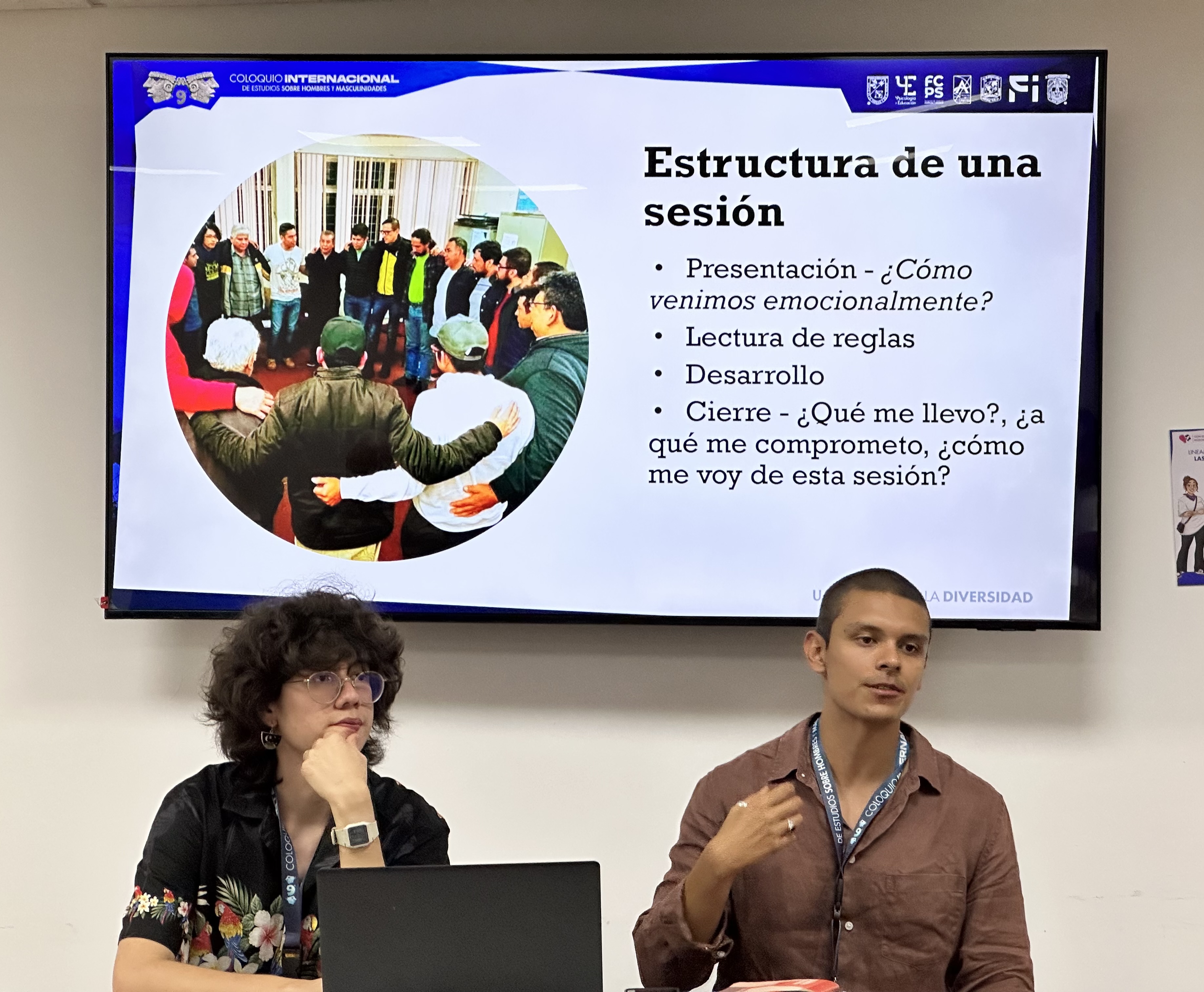
In Medellín (Colombia), the Colectivo Masculinidades en Movimiento (Masculinities Moving Forward) came out of a local feminist organization, Amiga Joven (Young Female Friend) that sought to prevent violence against women and girls and continues to focus on issues of domestic and partner violence. “It had to break away and be run by men, because men don’t want to go to a group run by women,” explained Wilmer Alvarez, a coordinator. (Yep, don’t we know this…! ) The Colectivo uses techniques of popular education, facilitated discussion and artistic creation that center care and self-care, to delve into issues as varied as disability, connections with nature, romantic love, bodies in the city, or friendship between men. Psychological health and well-being cut across all of their work, but they refer out those who need professional mental health care.
School groups reach boys as they are forming their identity, and are usually mixed (boys and girls). Aurora Durán of the Mexican organization GENDES explained how “listening and support groups” had been set up in 2019 in two high schools in San Cristóbal de Las Casas (state of Chiapas) after several boys had ended their lives by suicide during summer break. Murders are the highest cause of male youth deaths in Mexico, followed by accidents and suicide. All these causes of death are tied to stereotypes of masculinity, explained Durán: for example, young men drivers “act out” on the road and are therefore 9 times more likely to have a car or motorcycle accident than young women drivers.
Young Mexican men are also 25-30% more likely to kill themselves than young women their age; in fact, 81% of all deaths by suicide in Mexico are in men. “While women think more about killing themselves than young men, young men actually end their lives much more, because they use lethal methods, especially guns,” said Durán. (That is true around the world, incidentally. In no country do women kill themselves at a higher rate than men, or even at a rate approaching that of men). Suicide rates and depression are both starkly on the rise in Chiapas, where 67% of the population still lives in poverty, and 30% are of Indigenous descent.
The performance of masculinity comes together during adolescence, explained Durán, when adolescent boys learn to harden themselves, remain silent, keep control, and adopt a “mask of hostility”—a process she described as “becoming emotionally incapacitated.” The result: depression, isolation, substance abuse, violence against women and girls, against other boys and men, and against oneself.
At first, only girls showed up in the group, but then one boy came. “I’m here because I don’t want to suffer alone,” he said. Other boys joined. Some just wanted to play hooky, some were silent or scared, some expressed constant ambivalence, while others opened up and engaged.
By 2025, the first 50-50 girl-boy group was constituted, after murders and disappearances rocked San Cristóbal and some of the boys were invited by their friends to join criminal gangs. They told the coordinators they wanted to leave that behind, to “move ahead,” and sought friendship, brotherhood, support, and just “being treated well and helping others.” Durán explained that the listening groups “don’t try to fix people, but instead share experiences, and show them the value of mutual help and care. We show them how to listen, and also to identify the structural causes of some of their problems.” If, for example, they face tensions with their parents, have they analyzed why? “They start to understand it’s not just personal. Their parents are working three jobs to survive, so the reasons are structural. And structural problems, social problems, need collective responses.”
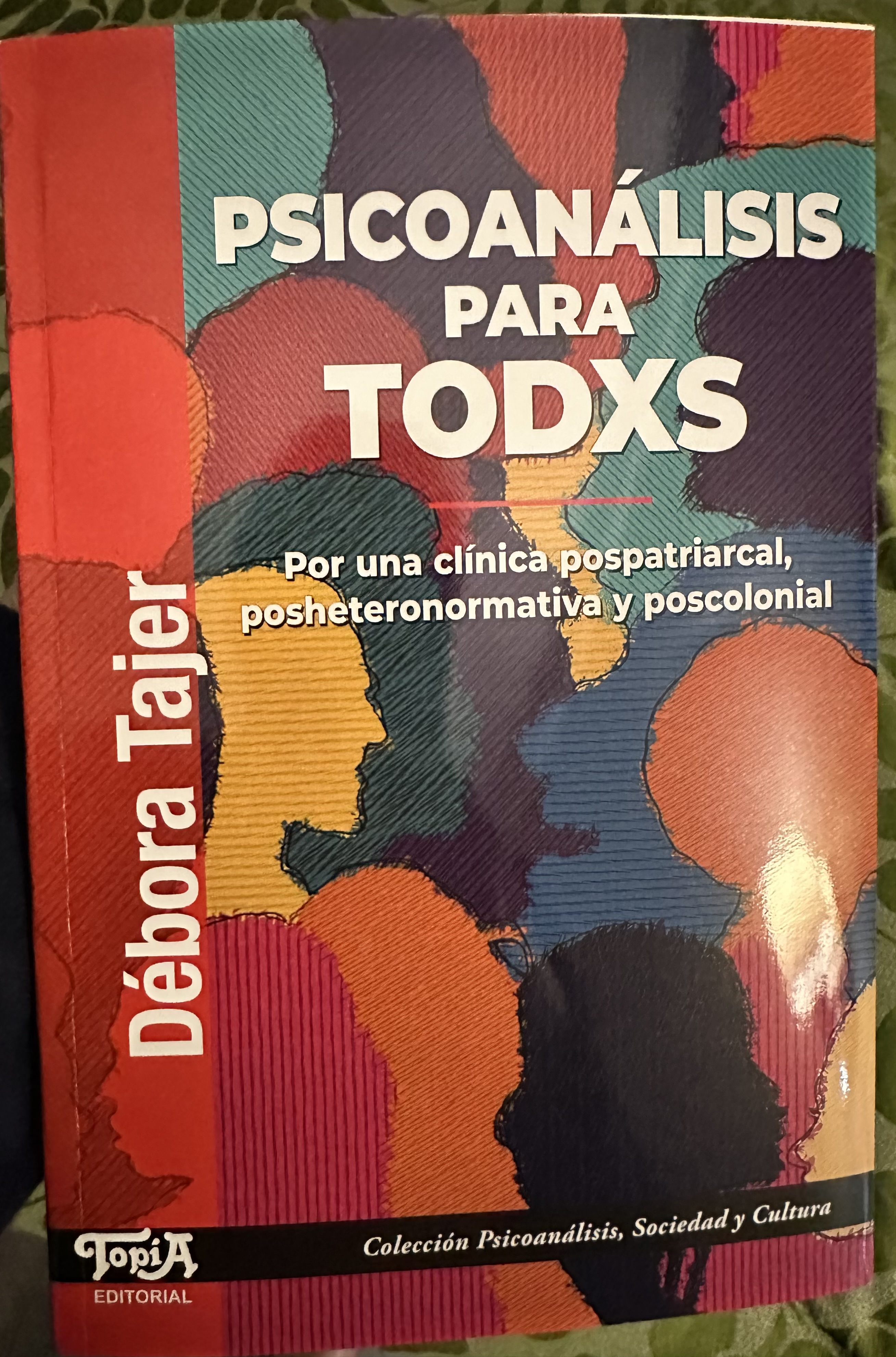
I especially enjoyed the call for a post-colonial, post-patriarchal and post-heteronormative psychoanalysis led by Dr Débora Tajer of Argentina. I’m not well versed in psychoanalysis (the Catholic schoolgirl in me?), so this was something of an eye opener.
“Everyone has a gender problem,” Tajer stated at the outset as she reflected on her own psychoanalytical practice. “No one is fine in the current system, including the powerful men who die of heart attacks under late-stage capitalism while apparently ‘successful’ under that model.” Keeping in control, working non-stop, displaying strength, exerting authority, remaining stoic—this brand of maleness kills men.
Sigmund Freud didn’t propose a theory of masculinity, Tajer noted. He developed his ideas from his observations of women, without acknowledging that fact, or delving deeply into the impact of women’s inferior social status as a cause of their psychic troubles. In her book Psicoanálisis para todxs, Tajer writes: “In addition to responding to the demands of the feminists of his time by pathologizing their claims—characterizing them as motivated by penis envy or phallic-narcissistic hysteria—he suggested that these issues could be resolved through clinical treatment.” As for French psychoanalyst Jacques Lacan’s positioning of men as the originators of symbols and language, Tajer called it with a note of sarcasm “a patriarchal reality cast as an insight.” So much hasn’t changed…
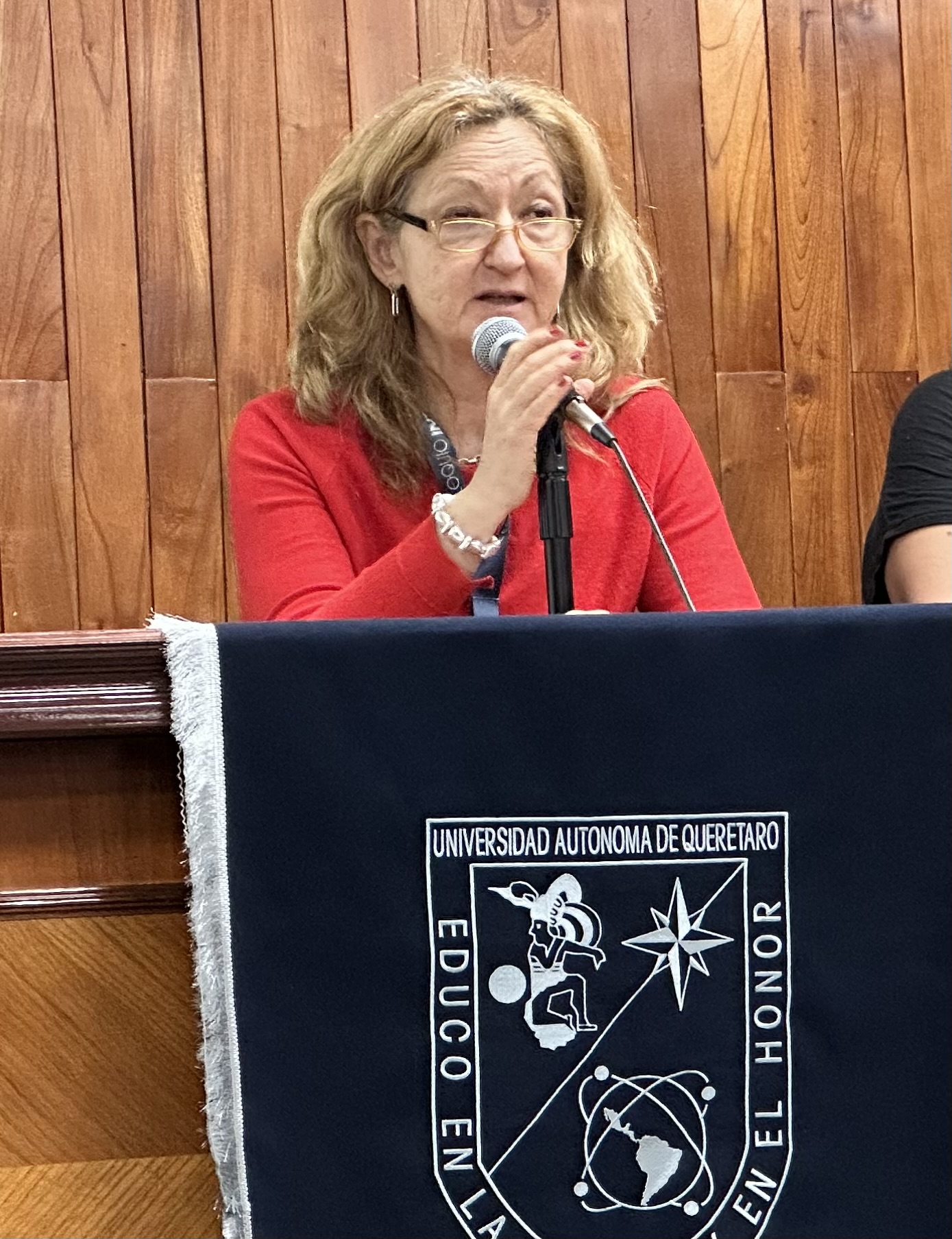
Even today, despite the rapid and dramatic change in the nature and context of relationships—whether in the context of love, work, families, or friendship—the underlying hierarchical asymmetry between genders in Argentina persists both in everyday life and clinical settings, said Tajer. In practice, in too many settings, the psychoanalysis of women continues to steer them towards a “cure” that involves having children and adapting to their role in patriarchal society.
Moreover, while LGBTQ+ persons are out like never before and have successfully fought for their rights, psychoanalysis has remained less than welcoming to their reality and needs: “Even today, it is still very costly for someone in a psychoanalytic institution to publicly come out as a gay or lesbian analyst—and even more so to come out as transgender,” said Tajer. “Our tools and theories are, in many respects, fundamentally designed to address the discomforts and pathologies of subjects shaped by heteronormativity.”
As for men themselves, “much of the daily work in the field of psychoanalytic clinical practice revolves around the development of autonomy in women and deconstruction of hegemony in men,” said Tajer. “In many clinical conversations with men, we still have to emphasize the fact that women are their peers and exist as equal.” And yet, “the men who come for psychoanalysis are the least violent, the more open ones.” Ooof! We’ve got a way to go.
Given these obstacles, Tajer argued for an alternative intersectional psychoanalytic practice, since those who identify as men have other dimensions that need to be brought in (race, class, caste, Indigenous status). Men cannot be understood or counselled solely as patriarchal dominators.
As I listened to the evidence in these presentations, a few conclusions jumped out:
Intra-family violence is often at the root of violent masculinities.
Again and again, researchers and facilitators noted that many of the men and boys they work with had left home when they were young because of the violence inflicted on them by their fathers or other male elders. These cycles of violence have to be broken, but interventions to do so are under-funded and often very small scale.
The number and reach of well-funded, powerful institutions actively creating and sustaining violent masculinities are simply staggering.
For example, researchers Diana Tiria y Daniel Galeano study former military and paramilitary men in Colombia. Military/paramilitary life deeply shape ideas of manhood. Adopting a “warrior posture” involves a process of desensitization and a change of identity that touches all aspects of these men’s lives, including developing a relationship with their weapon as a kind of female companion (“el arma es como mi novia”/the gun is like my girlfriend). Collective joy at witnessing death (“the libido of destruction”) becomes a marker of masculinity in armed groups, whether the military, para-military or anti-terrorism, anti-drug units, argued Héctor Dominguez of Austin University (Texas). These emotional traits and behaviors stay with them when they return to civilian life.
Several presentations addressed the growing reach of the ultra-misogynist manosphere. It’s not reassuring to hear that there is now a flourishing Spanish-language manosphere AND a Portuguese one targeting Latin America. Like Andrew Tate in the English-speaking world, masculinists sell online courses to teach young men how to become “alpha,” make money easily and dominate women, non-binary folks and "lower status" men.
Gymbros, cryptobros, “looksmaxxers” are online all over the region, explained Mauricio Zabalgoitia of UNAM in Mexico. “The male body is key in their vision of the world. It’s their visible capital. The gym is the temple and quick riches the goal that will guarantee access to the sexual market.” Women who resist or fight them are doxxed and harassed.
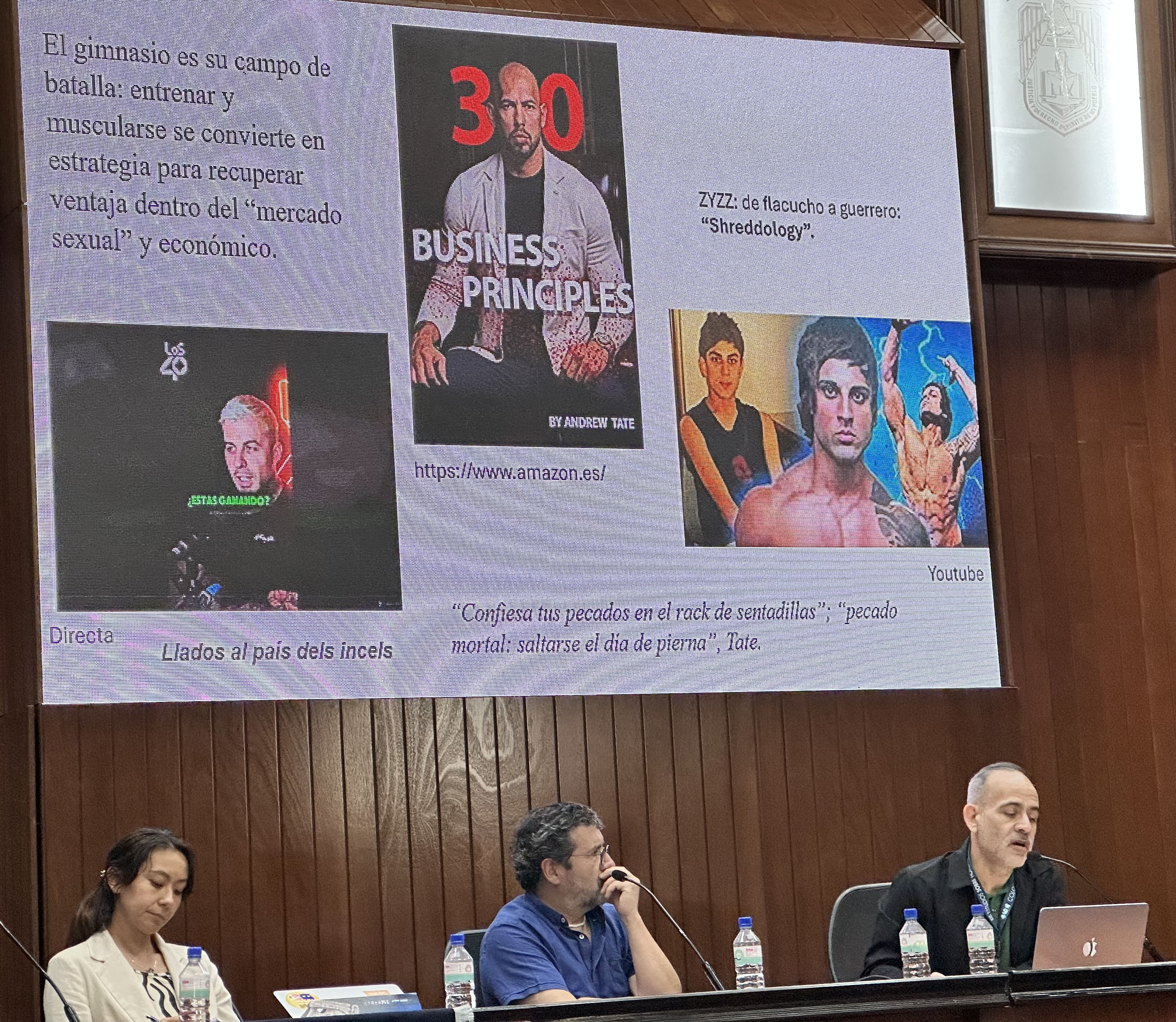
Lower-income men spend more time in the manosphere than their better-off peers, and they are particularly susceptible to the grievance and victimhood discourses that blame women and migrants for their woes.
In Latin America and beyond, the gap in gender norms between young men and young women is growing.
Melissa Wong of Equimundo (Peru), reported that in several countries of the region, young men and boys are less in favor of gender equality than older men are, while young women and girls are more committed to it than their female elders were.
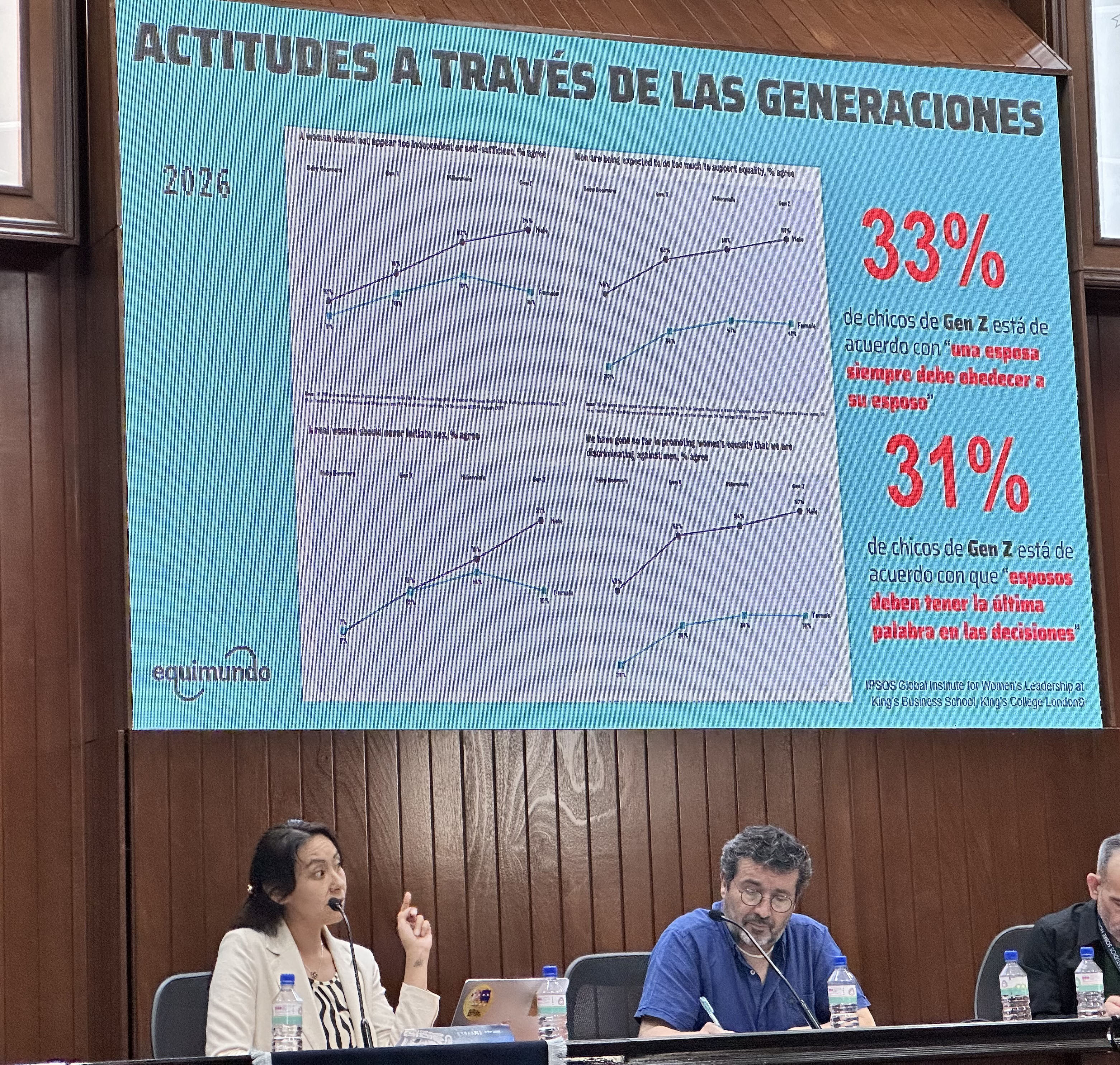
This is also true in many countries outside the region. A longitudinal (2014-2023) analysis in 20 countries by international research agency Glocalities found that Gen Z women have increasingly embraced “anti-patriarchal” values, while men their age have stayed the same. Glocalities found young women are most concerned about issues like “sexual harassment, domestic violence, child abuse and neglect, and mental health problems,” while young men were generally more focused on “competition, bravery, and honor.” Even more troubling, young men were found to be less liberal than older men.

Anti-feminist, anti-LGBTQ sentiments are deep motivators for masculinists, and they are closely connected to anti-migrant and racist hatred and violence.
As Mara Viveros Vigoya demonstrated in her keynote, two symbolic figures provoke particular anger and fear in masculinist movements: the “traitor” i.e. progressive, “woke” elites such as feminists and gay men with their “immoral and disgusting practices,” and the “intruder” or “stranger”, who “takes what belongs to us” (our women, our jobs, our culture, our country).
Re-politicizing masculinities
Sonia Correa helped relocate the focus of the discussion about masculinist movements out of the realm of the personal and clinical and into the structural and political.
At Sexuality Policy Watch in Brazil, Correa has documented how, since the mid-2010s, anti-gender politics erupted in Latin America, after developing in the U.S. and Europe.
In the U.S., reaction to Vatican II and to the impressive gains of the civil rights and feminist movements—racial desegregation and Roe v. Wade, among others—led to the creation of right-wing institutions that are still central actors in far-right and anti-gender movements, notably the Heritage Foundation (1973) and the Conservative Political Action Conference (CPAC) (1974). As they sought to revamp their strategies, these far-right actors delved into Marxist theory and decolonial literature. They embraced the very tactics that Marx and Gramsci considered key to revolution: winning “hearts and minds” by investing massively in institutions “above and below” the state—such as media, schools, cultural institutions and workplaces, and waging culture wars that were highly adaptable to context. Digital communications proved especially useful to spread their ideas.
Meanwhile, by the 1980s, the Vatican under Pope John Paul II and Cardinal Joseph Ratzinger (the future Benedict XVI) began developing a response to feminist theories of gender and sexuality, developing doctrine on the “complementarity of the sexes” and the “genius of women” that rebuffed the idea that sex could be divorced from gender, and reaffirmed the primary role of wife and mother for women. In a surprise move, the Vatican (unsuccessfully) attacked the very concept of gender at the 1995 World Conference on Women in Beijing. The Vatican then began promoting the idea that a nefarious “gender ideology” was being deployed by feminists and LGBTQ+ groups to destroy the traditional family and enable abortion.
As Correa noted, the content of this so-called “gender ideology” isn’t always coherent. It varies widely according to what anti-gender actors find most fruitful, and can encompass sexuality education, same-sex marriage, trans rights, gay rights, sexual and reproductive health and rights, abortion, contraception, feminism, and even the prevention of violence against women. Anti-gender movements weaponize one or more of these issues to whip up fear and outrage. This is done to attack gender equality itself, said Correa, but also to help elect far-right candidates, who go on to undermine the independence of the judiciary, interfere in elections, deregulate economic activity, attack migrants and minorities, and increase police repression.
In Latin America, anti-gender movements helped elect far-right Brazilian President Jair Bolsonaro in 2018, and played a role in electing the right in Uruguay, Costa Rica, Chile and beyond. Argentina under Javier Milei is currently experiencing this exact phenomenon: a “revanchist re-masculinization, a new virile utopia,” as researcher Luciano Fabbri argued. The far-right has now taken over the state to implement its own agenda of austerity, de-regulation and unfettered capitalism, pairing this with aggressive anti-gender measures. For example, soon after he was elected, Milei ordered that inclusive language be taken out of government documents and communications. He also attacked trans rights, notably by banning changes in gender markers on government documents and prohibiting access to gender-affirming care for those under 18.
This mirrors what Trump has done since he was re-elected. Let’s not forget that one of Trump's very first executive orders in January 2025 was entitled "Defending Women from Gender Ideology Extremism and Restoring Biological Truth to the Federal Government.”
Gisela Zaremberg of FLACSO in Mexico, noted how political parties who put forward austerity policies simultaneously conveniently present the nuclear family as the solution to the disappearance of state services—requiring women to return to traditional roles to take on elder care and home schooling of children, while they lose access to contraception and abortion. At recent CPAC conferences, speakers such as Milei openly argued against the very idea of a “care society.”
Now what?
When I asked her at the end of the conference where she thought things stood, Sonia Correa told me she was pleased to see that Latin American practitioners and advocates working to redefine masculinities and gender were increasingly realizing they couldn’t do that work without taking into account the powerful far-right political forces that seek to use these ideas to weaken democracy and do away with human rights. “There is still a dominance in the field of the disciplines of psychology or social work that deal directly with the crises of men—either men themselves suffering, or the crises men produce in their family or community. I’m not saying that’s not needed, just as I wouldn’t say responding to the needs of women who suffer from domestic violence shouldn’t be done. But it must be done with a view to the overall political project of the far-right, the macro situation. Limiting your work to psychological support for aggressive perpetrators or doing clinical with men trying to cope with anxieties, isn’t going to mean much when the far-right takes over. That work becomes totally irrelevant in a context where men aren’t supposed to have anxieties, much less go to a psychologist.”
That’s exactly right. Men being violent and macho is actually the plan under fascism, because men are needed for war, for policing, for state repression. We’ve recently seen this firsthand in the U.S., where images of hyper-masculine, heavily armed men feature on recruitment posters for ICE agents, or when the rhetoric of “no quarter, no mercy for our enemies” and “maximum lethality, not tepid lethality” is deployed by wannabee-tough-guy U.S. Secretary of Defense Pete Hegseth as he removes women and Black men from top military positions.
“I’d also like those working in this field, either in research or clinical interventions, to have a strategy for quick response when the question of masculinity is squarely at the center of an event,” said Correa. She pointed me to the case of Brazilian modelling agent Paolo Zampolli, who had just made Brazilian headlines by calling Brazilian women “sluts,” “a cursed race,” and “programmed to cause confusion.” A close friend of Donald Trump, Zampolli had used his high-level connections to have ICE deport his ex-wife back to Brazil so he could get custody of his teenage son.
“This kind of episode, in my view, requires Brazilians working in the field of masculinities to take a political position and react,” said Correa. “It’s not just for feminists to get outraged and issue a statement. We need the men to react. If the field wants to be relevant it must speak up, it cannot remain silent in key moments like these. Men shouldn’t think they can just go away and work on psychosocial support on their own, without engaging in the politics of how masculinities are being weaponized against all of us.”
Yes. The question of men’s involvement in that change remains very much on the table.
As I left Querétaro, I was still pondering whether masculinity itself was a useful concept. Could we ever take the domination, the emotional desensitization, the violence out of it? When so much work is needed to fix something, isn’t it a sign it’s not fit for purpose? Perhaps we should just ditch masculinity/ies to replace it with something more akin to humanity.
Over the past decades, feminists have done a lot of debating and thinking about the very idea of “the feminine.” We have demanded to be free of gender stereotypes and constraints, to have our rights respected and realized, and for our humanity and dignity to be recognized. Feminists aren’t hanging on to the idea of “femininity,” even when they identify and enjoy presenting as women. We can be whatever we want to be, just as men can be.
Isn't it time for men, and for all of us, to give up on “masculinity”?
In feminist solidarity,
FG