
Newsletter October 2026
Feminists respond to the attacks on the LGBTQI+ community in Turkey
Last month, the government of Turkish President Recep Tayyip Erdoğan ordered sweeping and unprecedented raids against LGBTI+ organizations, activists and businesses, coupled with attacks on independent news and social media. Turkey’s justice minister, Akın Gürlek, perversely dubbed the nationwide sweep “My Family is Safe,” claiming it was intended to “protect our children, the institution of the family and the social order.”
“This is pure fascism, it’s targeting people for what they are,” Turkish feminist Pinar Ilkkaracan told me when I reached out to offer support. Ilkkaracan, a highly respected human rights activist, is the founder of feminist organization Women for Women’s Human Rights (Kadının İnsan Haklar Derneği), and the 2007 winner of the international Gruber Prize for Women’s Rights. She now works and lives in Germany but was in Turkey at the time of the raids.
As familiar as she is with the regime’s tactics, Ilkkaracan was horrified by the magnitude and breadth of the attacks. The Erdoğan regime has applied increasing pressure to its perceived opponents, real or potential, over two decades, and especially since the coup attempt of July 2016. But this was a new development and a significant escalation.
Credit: AFP
“What is going on is vicious. It’s really wicked,” she told me. “The political situation was already a nightmare but we’re now facing a huge step backward. They’ve been going after journalists and political opponents, and now we have this massive attack against the LGBTI+ community.”
This should worry all of us who care about LGBTI+ rights anywhere, including in a country as pivotal as Turkey. But the Turkish government’s statements and actions make clear that persecuting LGBTI+ people is part of a broader plan to dismantle democracy and human rights.
Turkish feminists understood that immediately: their bold response demonstrated why they’re one of the most effective—and most strategic—social movements for democracy and human rights in Turkey today. They’re sounding the alarm and calling for help: “What we need most at this time is solidarity.”
The latest attacks
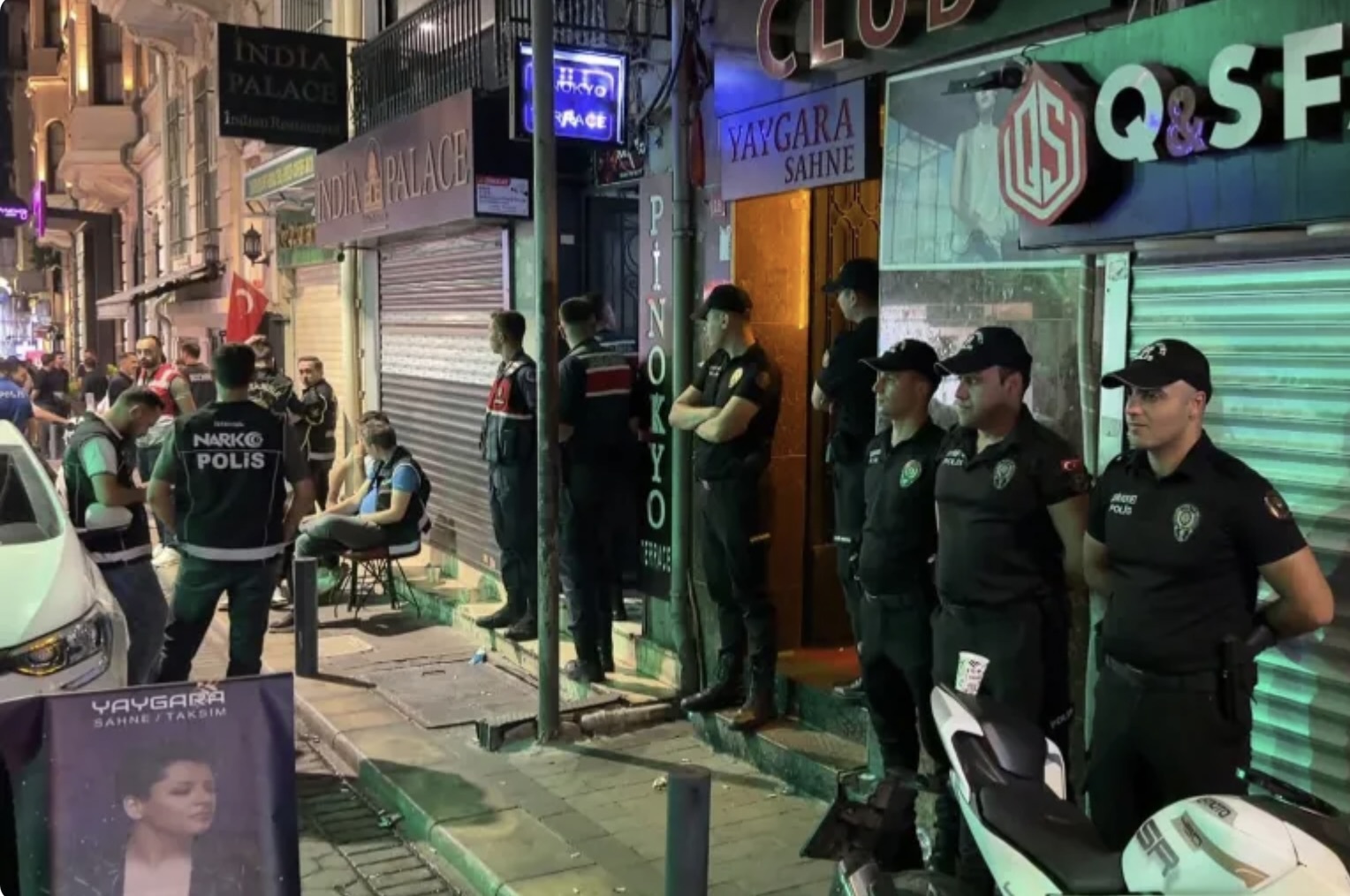
Beginning in the early morning of September 13, 2026, in Ankara (the capital), Istanbul, İzmir, Aydın and Mersin, Turkish police raided the offices of seven LGBTI+ organizations and two HIV support groups, as well as several bars and nightclubs.
At least 117 people were initially detained. Of these, 50 were activists, founders, board members or executives of the nine organizations: their homes were also raided. Judges subsequently ordered 83 of those detained to be held pending trial. Police were seen taking away documents, computers and files from homes and offices, along with rainbow flags (!).
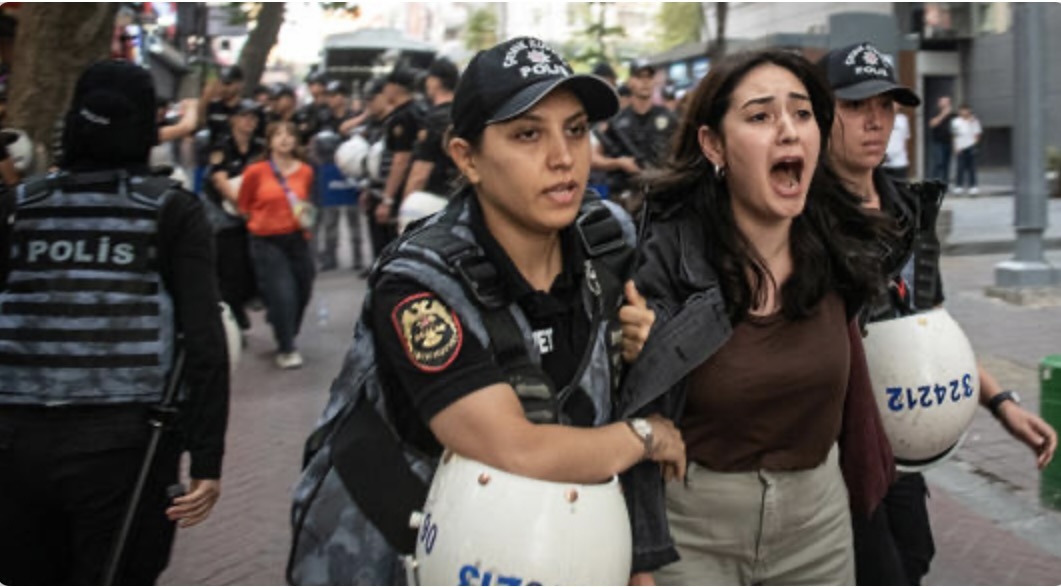
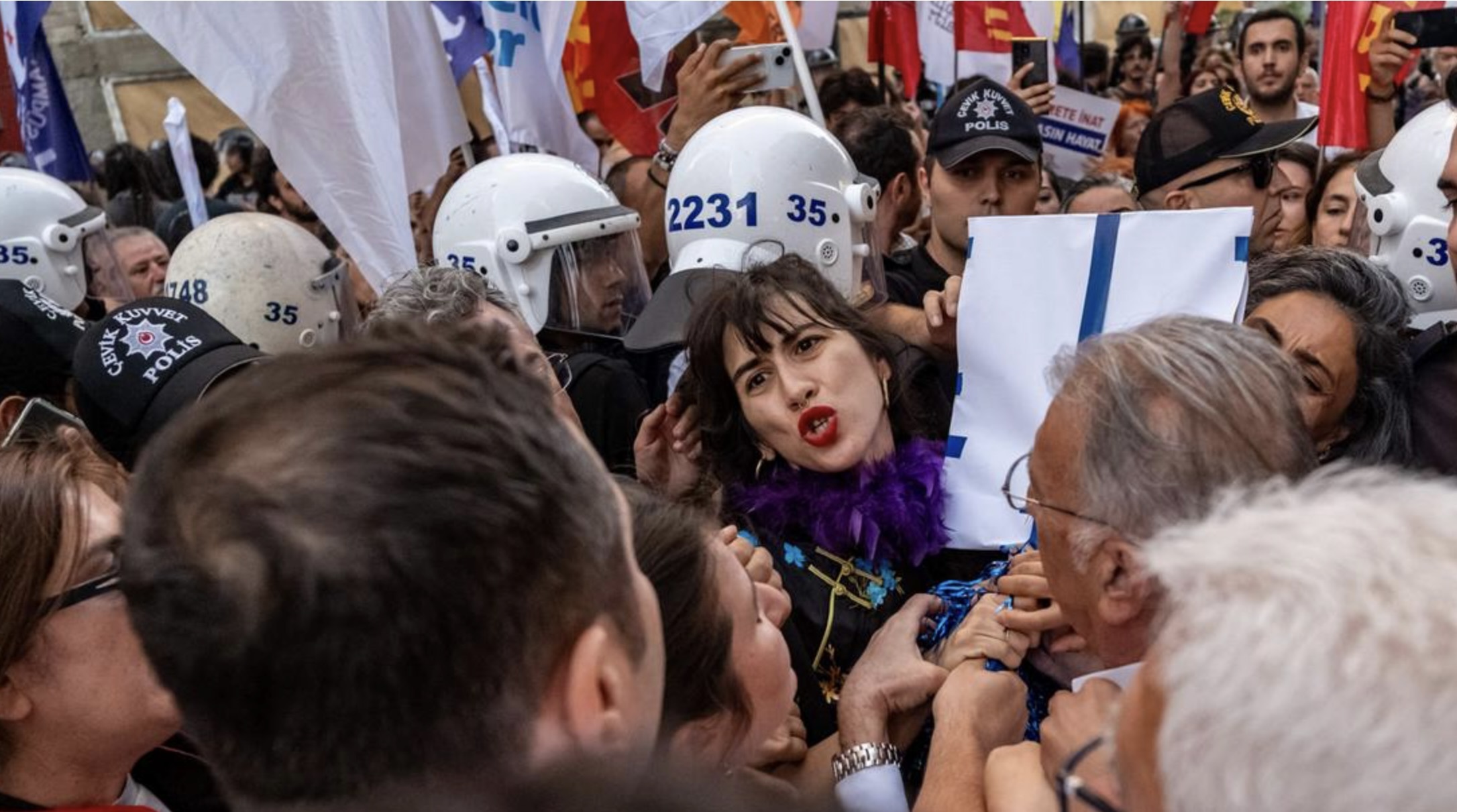
When other activists and academics came out to express their solidarity with those swept up in the operation, police pepper sprayed, arrested and held them in custody for two days before releasing them; 109 of these supporters were detained in Istanbul alone.
The LGBTI+ rights organizations under attack are Kaos GL, HEVİ LGBTI+, LİSTAG, SPoD, Lambdaistanbul, Muamma and 7 Renk, while the organizations working with people living with HIV are Pozitif Yaşam and Pozitif-iz. All of these groups have operated openly and legally in Turkey for years. According to statements reported in the Turkish press, the government is considering closing at least four of the organizations.
Homosexuality isn’t illegal in Turkey, so this massive nationwide sweep was a shock. “This is the first mass wave of criminalization of LGBTI+ people by the government,” explained İrem Gerkuş, the communications coordinator at Women for Women’s Human Rights.
“The LGBTI+ community in Turkey isn’t per se political opposition,” Ilkkaracan told me. “Many of those arrested are just regular people, and they’re not political.”
But that didn’t stop Justice Minister Gürlek from announcing that warrants had been issued against 162 people across 15 provinces, with accusations ranging from prostitution and drug trafficking to financial crimes, including receiving foreign funding.
A queer academic, researcher and human rights advocate based in Turkey, who asked to remain anonymous, noted that certain LGBTI+ persons are more vulnerable to accusations of criminal behavior than others. It was not surprising, in their view, that a large number of those arrested were trans women, who were charged with prostitution and/or obscenity.
Freedom of the press and of expression suffered a further blow. In connection with “My Family Is Safe,” courts quickly ordered 419 social media accounts blocked: these included not only the accounts of the groups that were raided, but those of journalists, human rights organizations and many ordinary people expressing solidarity. As I write this, the Turkish government has expanded its censorship to block over 1,000 accounts on X.
It got worse. On September 30, Istanbul’s First Magistrates Court agreed with a Ministry of Justice request to shut down the website and social media accounts of T24, a leading independent digital news website, on the grounds of “LGBT propaganda” and “content aimed at weakening the Turkish family structure.” In mid-October, pro-opposition Halk TV was raided, its live broadcast interrupted and a government trustee appointed to take it over; its owner is accused of bribery and money laundering.
The Ministry of Justice also sent a directive to public prosecutor’s offices across Turkey’s 81 provinces to go after online content it considers offensive to “public morality” and “harmful to youth.” Minister Gürlek described the groups and individuals under attack in this terrifying manner: “We will show no tolerance for any criminal organization targeting the institution of the family, the future of our youth, and the order of our society." [my emphasis]
A swift and courageous response
Turkish feminists reacted swiftly and boldly, recognizing that this attempt to characterize the defense of human rights as a criminal activity was extremely dangerous.
Within 24 hours, they had organized an international statement, Stop Criminalizing the LGBTI+ Movement in Turkey (Türkiye’de LGBTİ+ Hareketini Kriminalize Etmekten Vazgeçin), which was signed by over 450 organizations from more than 65 countries. It demands an immediate end to operations targeting LGBTI+ organizations and activists as well as the release of all detainees. Global organizations such as ILGA (International Lesbian, Gay, Bisexual, Trans and Intersex Association), CIVICUS, Association for Women’s Rights in Development (AWID), PEN Norway, International Planned Parenthood Federation (IPPF), Femena, CREA, Fundación Estudio e Investigación Mujer FEIM (Argentina), GLAA, International Women’s Development Association (IWDA) and others signed on, as well as dozens of local Turkish groups.
“We are alarmed by signs that legitimate civil society activities are being falsely labeled as criminal, including accusations related to obscenity, prostitution, drugs, and morality. The prosecution is attempting to create a narrative that LGBTI+ civil society organisations and human rights defenders are part of a criminal organisation. Viewing advocacy, publications, or fundraising as organized crime represents a serious escalation of repression of civic space. We are also worried that lawful domestic and international funding of LGBTI+ groups is being seen as suspicious. Such funding is legal and necessary, already regulated by Turkish law, and should not be considered evidence of criminality. In Turkey, the receipt of funding by civil society organisations (associations and foundations) from abroad and from international organisations is subject to very strict oversight by the General Directorate of Relations with Civil Society, which reports to the Ministry of the Interior of the Republic of Turkey,” noted the international statement. [my emphasis]

“The feminist movement was the first to stand behind the LGBTI+ movement, despite all the dangers. I’m very proud of this response. This was 24 hours of intensive, quick work,” explained Ilkkaracan. “It shows the strength and energy of the feminist movement. Women for Women’s Human Rights coordinated with local women’s groups across the country, in Anatolia, for example. LGBTI+ issues are still not easy to support publicly in small towns in Turkey, but the many years of human rights education that these local women’s organizations have gone through made the difference. It’s not a lost cause!” she noted.
Other civil society actors quickly joined in. “Lawyers organized legal support for people in detention, activists followed the cases and supported families, organizations documented violations, and people gathered outside courthouses and tried to make public statements, “ the queer academic wrote me. “There has also been an enormous effort to keep information circulating… through alternative channels, document what is happening and mobilize international networks. This has helped make the crackdown visible outside Turkey as well.”
There were disappointments, nevertheless. “Several opposition journalists were afraid to stand up. They didn’t want to write a word about this,” said Ilkkaracan. “The main opposition party was once a strong supporter of LGBTI+ rights. But their successors in the New Party (“Yeni Parti”) weren’t eager to speak. Women’s rights groups went to meet them in Ankara, and they told us ‘we won’t speak for the moment.’ Can you imagine?”
Several days after the raids, New Party leader Özgür Özel finally issued a statement criticizing the operation for its “extraordinary carelessness” and "unconstitutional" character. He expressed particular concern that organizations working on health care and HIV, with doctors as members, were being accused of immorality and obscenity, but he stopped short of standing for the human rights of all LGBTI+ persons.
Weaponizing the Penal Code
The grab bag of criminal charges against groups and individuals is a new development. “The accusations [against LGBTI+ organizations and advocates] themselves are extremely broad,” noted the queer academic. “Funding, obscenity, alleged child protection concerns, association law, sex work and other completely different issues are being brought together under the umbrella of the same operation. From our perspective, these allegations are unfounded, but putting them together creates a powerful narrative of criminality around organizations that have been working openly and legally for many years.” [my emphasis]
The queer academic noted that past raids on organizations and individuals in Turkey were largely framed as counter-terrorism, whether against Kurdish activists or sympathizers, or political opponents of President Erdoğan. “What is striking now is that LGBTI+ organizations are being targeted through a different and very broad framework centered on morality, obscenity, the protection of children and the family,” they stated. “It’s extremely serious and still unfolding. What worries me most is that we are not dealing with a single police operation or a limited number of individual cases as in the past. We are seeing several forms of pressure operating simultaneously: home raids, arrests and pre-trial detention, investigations into associations and their members, searches of offices and seizure of digital equipment, blocking of websites and social media accounts, scrutiny of organizations’ funding, and the detention of people simply gathering in solidarity with those targeted.”
Ilkkaracan, who was deeply involved in the process to revise Turkey’s Penal Code in the early 2000s, remembered how there used to be dozens of provisions on public morality in the Code. “We succeeded in cleaning all that out. But despite our best efforts, two articles were left in: one on “obscenity,” and one on “shameful behavior.” So now they’re using obscenity to attack. Just being gay or lesbian is obscene. Having an LGBTI+ organization is obscene. A website is obscenity itself. How are they going to prove it, I don’t know,” she stated.
The classic authoritarian playbook, part 1: attacking LGBTI+
It’s worth remembering that Erdoğan himself wasn’t a vocal opponent of LGBTI+ persons at the beginning of his rise. In 2002, before the Adalet ve Kalkınma Partisi or AKP (Justice and Development Party) he founded came to power, Erdoğan was asked on television about the rights of gay people. He replied that homosexual people needed legal protection within the framework of their rights and freedoms, and that he didn’t find the treatment they sometimes faced to be “humane.”
Yet by the early 2010s, Erdoğan’s government had moved away from that position, and was arguing that supporting LGBTI+ persons was “against the values of the nation.”
What explains this? Experts on gender and far-right governments, such as sociologist David Paternotte of the Université libre de Bruxelles, argue that “anti-gender agendas serve as central ideological and strategic tools underpinning the hegemony of authoritarian and right-wing populist regimes.”The Erdoğan regime evidently chose that familiar playbook of far-right, authoritarian governments everywhere: to use issues of sexuality and gender to demonize vulnerable groups and gain or consolidate power.
“This was not a surprise. It’s been coming for years,” Paternotte told me. “Turkey has moved towards a Russian model of governance and discourse, against ‘progressive excess.’ Picking on LGBTI+ is an obvious move, as it was for Putin in Russia. LGBTI+ groups are small groups that have relatively little social support.”
And so, more than a decade ago, the Turkish government began banning certain LGBTI+ events including the popular Istanbul Pride March. It also unleashed police violence against specific LGBTI+ persons, instituted legal proceedings against certain organizations’ publications or individuals’ social media posts and imposed restrictions on some social media accounts of those working in the field.


During the COVID pandemic, prominent Muslim scholar Ali Erbaş blamed gay persons for the disease; Erdoğan endorsed his comments. By 2023, ahead of a critical presidential and parliamentary election, Erdoğan was openly saying his party "[was] against LGBT" and accusing the Turkish opposition of being gay.
The Erdoğan government “clearly changed its discourse over the years,” Paternotte told me. “But I don’t see it as religiously motivated. Erdoğan talks about re-Islamization, but he also presents Atatürk, the secular founder of modern Turkey, as his model. It’s really the classic playbook of authoritarians. Attacks on feminist movements are part of this, along with the promotion of pro-government, “official” women’s groups such as KADEM, which help legitimize the regime.”
Gerkuş agreed: “The situation we're in is not, in fact, directly linked to Islam. Conservative, right-wing populist and authoritarian leaders and parties are gaining strength globally. From Hungary to Russia to the United States, we’re facing an organized anti-gender movement that learns from each other, adapts these strategies to their own national contexts, and uses them to intensify repression in their respective countries.”
In 2025, a draft law on “Amendments to the Turkish Penal Code and Certain Laws” prepared by the Ministry of Justice was leaked to civil society activists. The law would have included amendments to the Civil Code and Penal Code to explicitly target LGBTI+ people, including a new criminal offence of “encouraging homosexuality” and provisions that would effectively have prohibited and criminalized gender affirmative care for trans people.
The draft law was stopped in its tracks “through a joint struggle of the LGBTI+ movement together with women’s organizations and human rights organizations,” Gerkuş wrote me. But even then, Turkish feminists and LGBTI+ activists feared something else was coming. “We knew that, even if it wasn’t enacted into law, it would be implemented through administrative and judicial practices. What we're seeing today is precisely this: producing the same outcomes in practice without passing a new law, by interpreting existing provisions on ‘obscenity’ and the Law on Associations in an expansive manner.”
The classic authoritarian playbook, part 2: “protecting the family”
Far-right parties and governments everywhere wave the “pro-family” banner to justify their actions. The Erdoğan government has been no exception.
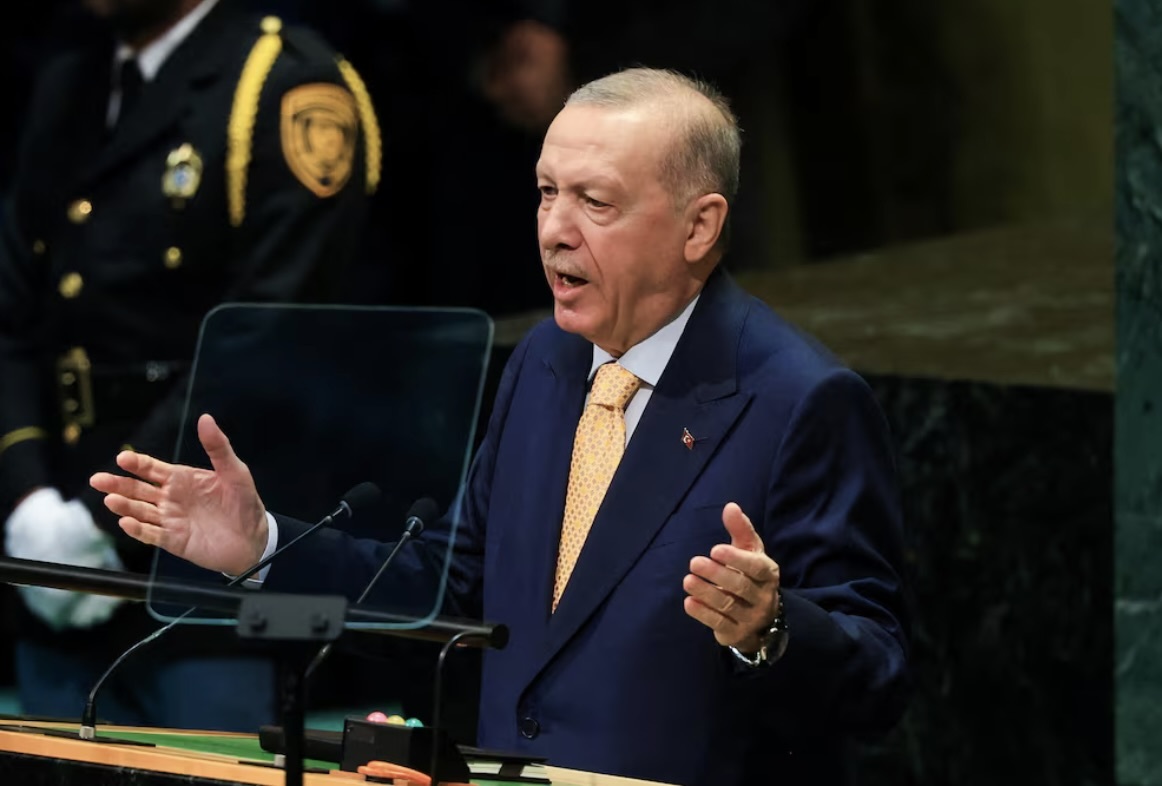
On September 22, 2026, mere days after the raids, Erdoğan used his address at the opening of the UN General Assembly to attack what he described as a “global policy of promoting gender neutrality.” Erdoğan claimed this so-called gender neutrality had “turned into a siege directed against innocent children and the institution of the family. We will only be able to break this siege by protecting the family made up of a woman and a man.” Erdoğan reminded his audience that he had declared 2025 the Year of the Family in Turkey, followed by the Decade of Family and Population (2026–2035).
It’s telling that Erdoğan chose to speak of a global “gender neutrality” movement, when the far-right, anti-gender, “pro-family” movement is itself transnational, well coordinated and well funded. Every accusation is a projection...
And whose families are we talking about? The queer academic observed that “there is a bitter irony in the fact the operation is called “My Family Is Safe.” What we’re experiencing is precisely the opposite: people are worried not only about what may happen to themselves, but also what will happen to their families, partners, friends and those who depend on them if they are detained or arrested. We are sleeping uneasily, wondering whose door might be knocked on next.”
Amnesty International made a similar observation in their communiqué on the events:“…families in Turkey are suffering poverty, insecurity and increased repression of their civil and political rights, while violence against women and girls is rife, including inside their homes. Far from protecting anyone, this sweeping crackdown has nothing to do with protecting families and everything to do with further harming and stigmatizing people who have battled decades of discrimination and intimidation.”
Feminists saw Erdoğan coming a long time ago
Turkish feminists have been denouncing Erdoğan and the AKP since the early years because of their anti-reproductive rights posture. Soon after he was first elected prime minister in 2002, Erdoğan opined publicly (and dangerously) that c-sections should be restricted, as they were “harming” the fertility of Turkish women. He also called on Turkish women to have a minimum of three children.
At that time, quite a few Western intellectuals and political leaders considered Erdoğan and the AKP as moderates that would uphold democracy and promote free markets. I remember all too well conversations with Ilkkaracan in which she expressed exasperation at the naïveté of these pundits and politicians, and at their willingness to trade off women’s rights in Turkey.
Of course, the feminists were right, and in retrospect, not alarmist in the least.
In 2012, Erdoğan proposed a law to limit abortions, which he deemed “murder,” sparking large demonstrations by Turkish feminist activists and petitions from international organizations. Abortion on request until the 10th week of pregnancy has been allowed by law in Turkey since 1983. When protests scuttled the draft law, Erdoğan nevertheless ordered public hospitals to limit the provision of abortions, creating a de facto ban for the many who can’t afford to pay for a private termination.
In 2014, he went after birth control, describing it as “treason” designed “to dry up our bloodline,” and by 2016, he was leaning heavily into a mix of religious and demographic arguments: “We need to increase the number of our descendants,” Erdoğan said in a speech in Istanbul. “People talk about birth control, about family planning. No Muslim family can understand and accept that! As God and as the great prophet said, we will go this way. And in this respect the first duty belongs to mothers.”
As Erdoğan’s government continued to turn more authoritarian, broader women’s rights also became a target. International Day of Women marches have been repeatedly banned from central Istanbul in recent years, sparking conflict with police as feminists have continued to march. In 2021, Turkey withdrew from the Istanbul Convention, the landmark (and eponymous!) Council of Europe Convention on Preventing and Combating Violence Against Women and Domestic Violence. In 2012, Turkey had been the first country to ratify the Convention negotiated on its soil. When it pulled out, it was the first time a member of the Council of Europe had ever withdrawn from an international human rights treaty. In an official statement, Erdoğan blamed the LGBTI+ community (!) for the withdrawal, arguing that "the Istanbul Convention, originally intended to promote women's rights, was hijacked by a group of people attempting to normalize homosexuality – which is incompatible with Turkey's social and family values. Hence, the decision to withdraw." The Convention protects victims irrespective of “gender,” “gender identity” and “sexual orientation,” among other categories.
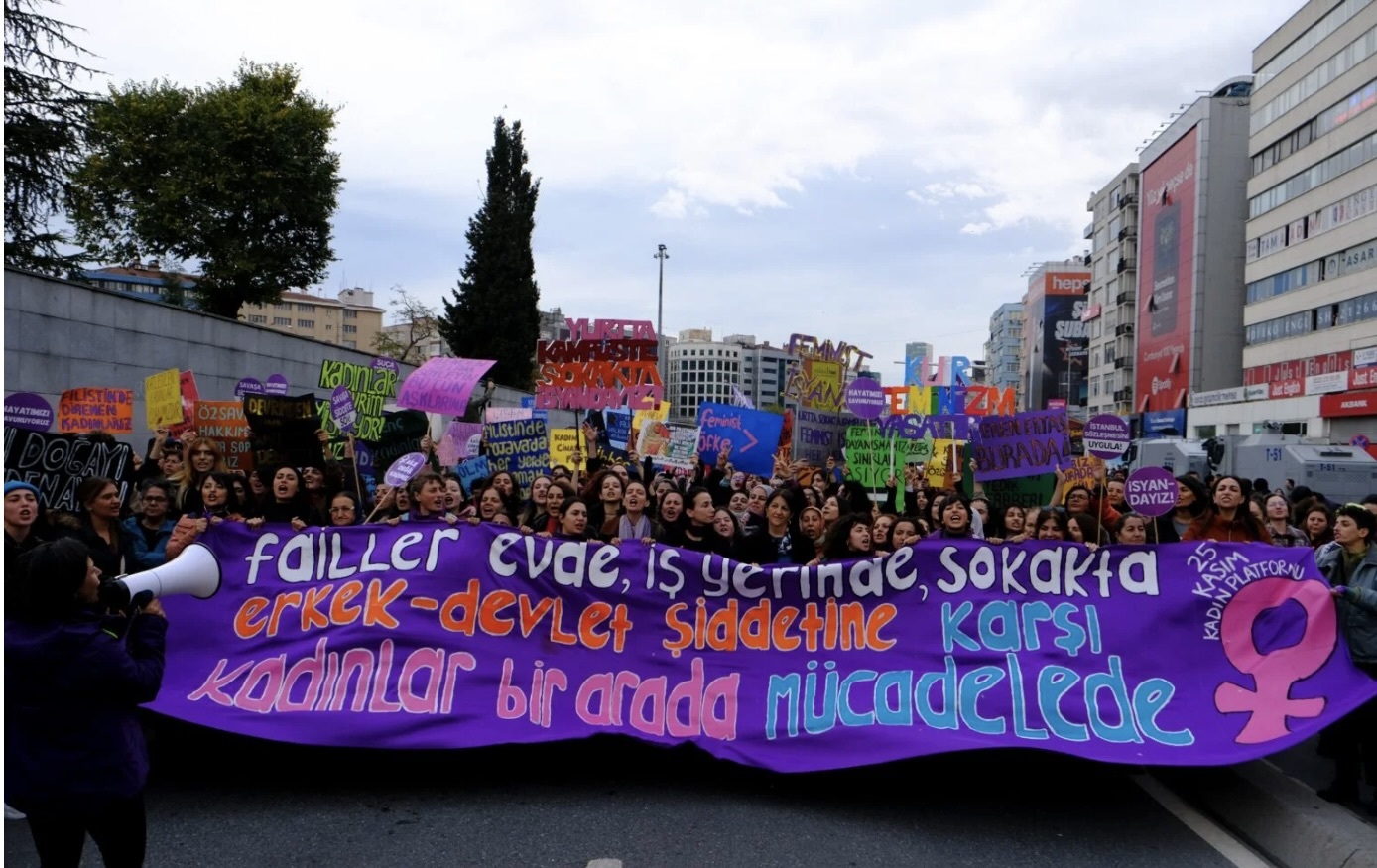
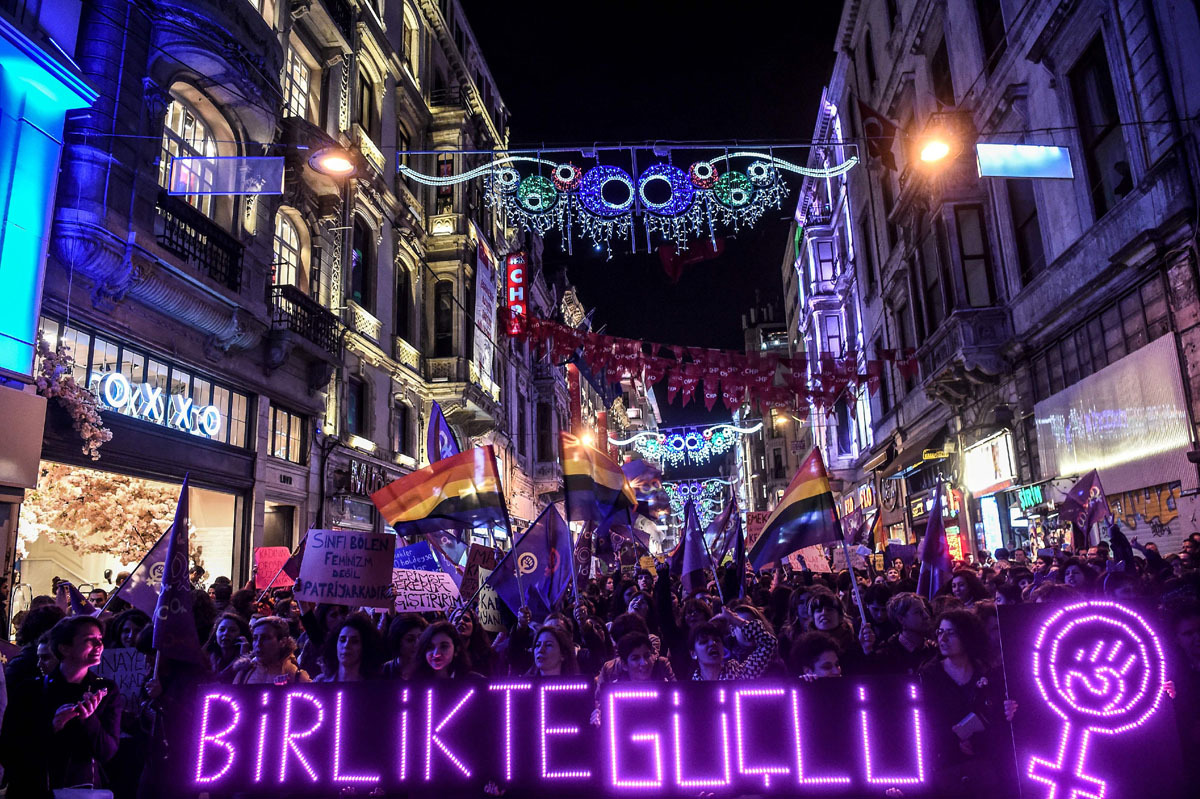
Will feminist groups be next for the kind of repression currently inflicted on the LGBTI+ movement? “Yes, they could be,” said Ilkkaracan. “He can’t go as easily against women’s rights, but he could go specifically after feminist organizations. Foreign funding, being ‘foreign agents’ would be a key accusation.”
Yet young Turkish feminists are not scared: “They’re young, mostly 25- to 35-year-olds, and they’re not fearful,” said Ilkkaracan. “Demographic arguments, having three to five children, that doesn’t make sense to them! Gen Z also feel strongly about LGBTI+ rights. Attacking LGBTI+ works with the AKP base, but even they might not follow him on women’s rights. Erdoğan knows that too.”
Disappointing international support
Gerkuş expressed disappointment at the tepid international reaction so far. On 17 September, the human rights ambassadors of France, Sweden, Finland, Germany, the Netherlands and Iceland issued a joint statement, expressing their “full solidarity” with LGBTI+ people in Türkiye.
On 18 September, the European Union issued a statement expressing “concern” over the arrests, legal proceedings, and allegations targeting civil society funding. European Commission spokesperson Christian Wigand pointed out that Turkey, as an EU accession candidate, "should promote and ensure respect for the human rights and dignity of all individuals, irrespective of their gender identity or sexual orientation, and that "stigmatization and discrimination are contrary to the values of the union."
But, Gerkuş explained, “these responses have no concrete sanctions or consequences. We expect governments to move beyond generic expressions of ‘concern.’ And some governments have remained completely silent. Canada, for example, didn’t join the joint condemnation issued by the six European countries; at a time when it is pursuing a potential trade agreement with Turkey, it chose to overlook the issue, and when asked about it, didn’t provide a clear answer.”
Indeed, Canadian Prime Minister Mark Carney was in Ankara in late October 2026 to seal a “strategic partnership” on defense, transportation and energy with Turkey. Carney was urged to raise human rights issues during his visit, but he doesn’t appear to have done so. Very disappointing!
“International solidarity isn’t as strong as before,” noted Ilkkaracan. “The EU used to be much stronger. They’re not keen to raise human rights in diplomacy. International media has also changed: they used to keep in close touch with Turkish feminists but no longer are. Trump has had a huge impact. The fact that only six countries spoke up, that’s a Trump effect.”
What is needed, Gerkuş explained, is “exerting pressure, both publicly and through diplomatic channels, for the immediate release of those detained; raising the issue within mechanisms such as the OSCE, the EU and the Council of Europe; and, most importantly, ensuring that this issue has real consequences in bilateral relations, trade, and diplomatic engagement.”
Distracting the public, evading accountability
Just days before the attacks against LGBTI+, Turkish officials had announced that an early election would be held in April 2028. Was this attack “the start of the election campaign,” as some commentators have surmised? Perhaps. But it's also a means to consolidate power in the immediate, and to avoid scrutiny for other scandals.
“We do not rule out the possibility this may be an electoral maneuver. At a time of economic crisis, declining living standards and an ongoing search for political legitimacy, producing a polarizing agenda around the discourse of “family” and “nation” is a familiar way for the government to consolidate its base and shift the public agenda. LGBTI+ people have long been constructed here as an ‘enemy’ and as a group that can easily be singled out and targeted. But reducing this merely to an electoral tactic would be incomplete – it is also part of a broader, ongoing strategy pursued by a government seeking to reinforce its position by targeting various groups, including women, Kurds, journalists and political opponents,” said Gerkuş.
In 2025, Erdoğan had Ekrem İmamoğlu, the popular mayor of Istanbul, removed from office and imprisoned on charges of corruption, insulting public officials and espionage, all of which İmamoğlu denies. İmamoğlu had vowed to challenge Erdoğan in the next elections. Thirty-one other opposition mayors have also been arrested over the past 18 months on fake corruption charges, while a main opposition party, the Republican People’s Party (CHP), was effectively dismantled by court order.
Erdoğan, his family and his acolytes are said to be involved in multiple corruption schemes, and are therefore unlikely to relinquish power willingly. On Sept 16, just as the attack on the LGBTI+ community was unfolding, a massive Ponzi-like scheme involving 131 investment funds blew up in Turkey, wiping out $18 billion in investments held by at least 450,000 people and rocking Turkey’s stock market. Government officials had failed over an 18-month period to regulate or shut down the funds while whistleblowers were harassed by police. “Positions in financial agencies are increasingly going to people loyal to the government and their relatives,” reported news site Charter 97 in a recent article analyzing the Turkish government’s failure to act. The former deputy head of the AKP, Fatma Betul Sayan Kaya, is facing accusations of profiteering from the Ponzi scheme; ironically, she was Turkey’s Minister of the Family from 2016 to 2018.
Solidarity and support are needed
What is most needed at this time? I asked.
“We need the right to live without having to constantly defend our existence,” said the queer academic. Many LGBTI+ peosons already live in poverty in Turkey. Faced with discrimination and violence, it's harder for them to hold jobs and secure housing. “Many of us do not feel safe in our homes, our apartment buildings, our neighborhoods, at school, at work or on the street. And now the organizations we built precisely to defend our rights and support one another are being criminalized and portrayed as enemies alongside us. When these organizations are attacked, people also lose places where they can seek legal support, solidarity and simply a sense they're not alone.”
Gerkuş told me: “It’s essential that everyone speak out clearly about the fact that simply existing is not a crime. Reiterating this message again and again, both nationally and internationally, is critically important. The process that begins with LGBTI+ people today may, in its next step, use its power to crush women, migrants, and workers as well.”
Yet they will fight on, against the odds.
“Sometimes it feels as if we have nobody but each other. But we do have each other. We have our solidarity and our networks of care. And right now, that solidarity is perhaps the most important thing keeping many of us going,” noted the queer academic.
Gerkuş felt the same way: “As long as the LGBTI+ movement, the women’s movement, human rights organisations, the left, and opposition parties continue to act through joint struggle and solidarity, these attacks can be pushed back.”
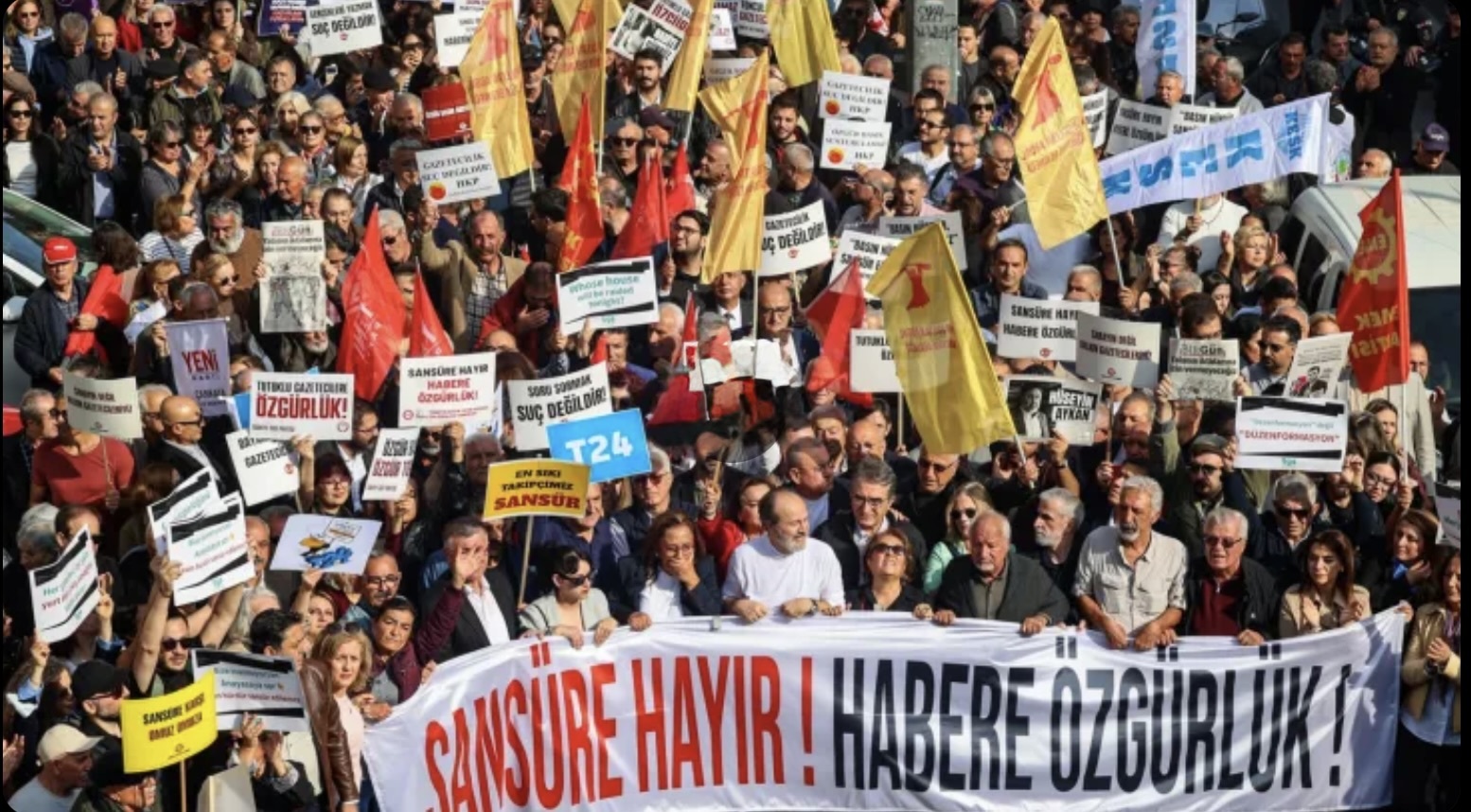
And they are in fact not alone. In recent days, thousands of people have taken to the streets across Turkey to protest attacks on journalists and restrictions on independent media. A luta continua!
Courageous words and actions for us all, as we face our own authoritarians everywhere.
If you’d like to support WWHR, please be in direct touch with me.
In feminist solidarity,
FG