
Newsletter March 2026
A collision of crises: Black maternal deaths in the U.S.
It’s a shocking and tragic statistic. Women in the United States die from pregnancy-related causes at a higher rate than women in any other wealthy country. The World Health Organization estimated that in 2023, the maternal mortality ratio was 2 maternal deaths per 100,000 live births in Australia, 3/100,00 in Spain, 5/100,000 in Greece, 8/100,00 in the United Kingdom and 17/100,000 in the U.S. That amounted to 610 pregnant women dying in 2023 in the U.S.

According to KFF, “one in five (20%) of these U.S. deaths occur during pregnancy, nearly one quarter (23%) occur during labor or within the first week postpartum, and more than half (57%) occur one week to one year postpartum, underscoring the importance of access to health care beyond the period of pregnancy. Recent data show that more than eight out of ten (87%) pregnancy-related deaths in the U.S. are preventable.
For Black women in the U.S., this crisis is significantly worse: “While all US women have experienced an increase in maternal mortality over the past two decades, the rate among Black women has increased most precipitously. Today, Black women are roughly three times more likely to die from pregnancy-related causes than white women, regardless of their economic or educational status,” according to the Washington, DC-based Institute for Women’s Policy Research (IWPR).

Credit: KFF
For example, in New York City in 2024, Black women accounted for 17.7% of all live births but a staggering 39.7% of all maternal deaths. In Mississippi, from 2017-2021, Black (non-Latina) women accounted for 78% of all pregnancy-related deaths, a rate more than 4.5 that of white women.
And the deaths keep coming. I was shocked to read that, earlier this year, Dr Janell Green-Smith, a certified nurse midwife and doctor of nursing practice, died in South Carolina soon after the birth of her first child. She was 31 and a well-known practitioner and advocate for safe and respectful birth care and Black maternal health. Absolutely crushing.
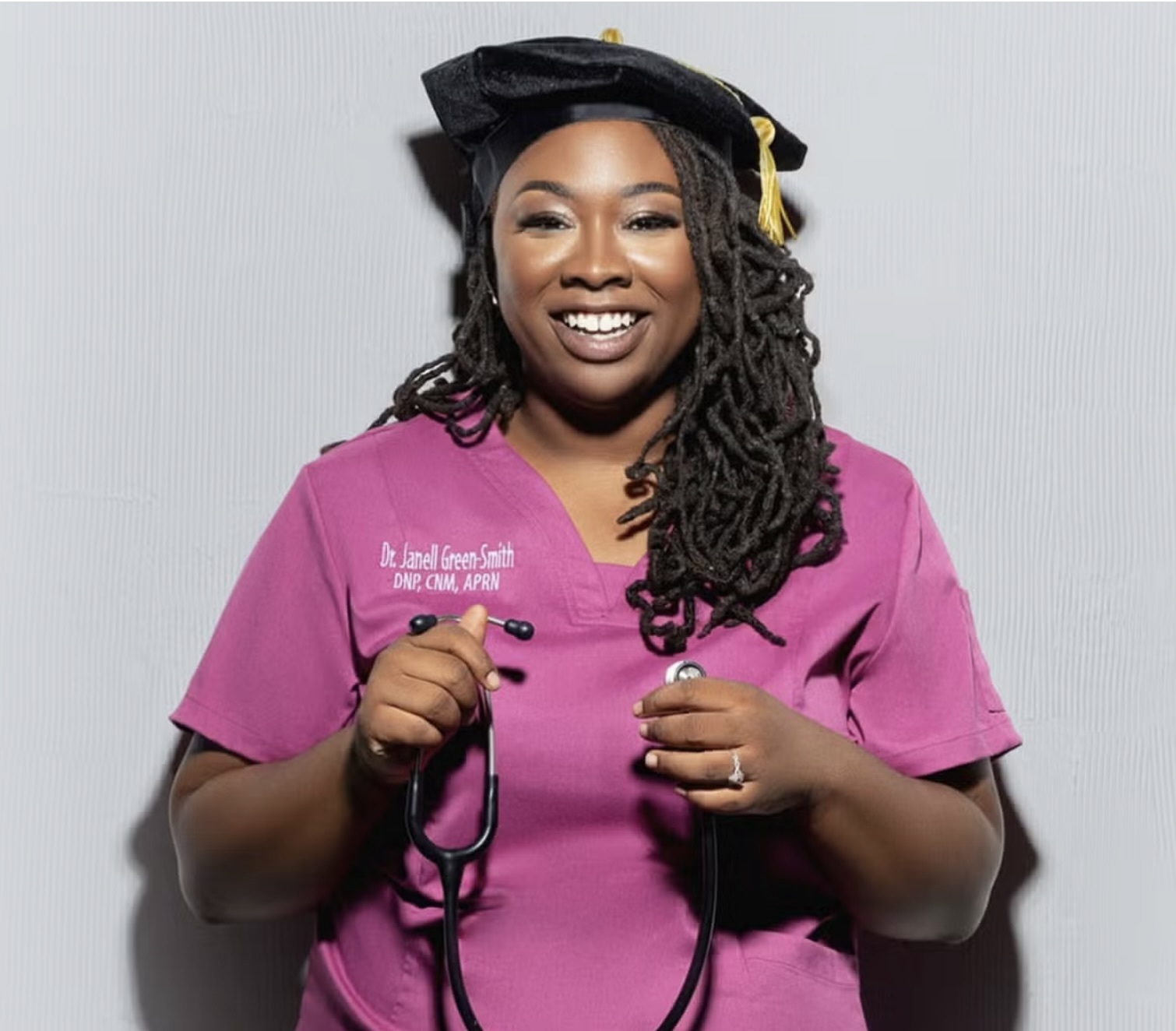
“That a Black midwife and maternal health expert died after giving birth in the United States is both heartbreaking and unacceptable,” the American College of Nurse-Midwives stated on their social media accounts. “Her death underscores the persistent and well-documented reality that Black women—regardless of education, income, or professional expertise—face disproportionate risks during pregnancy and childbirth due to systemic racism and failures in care. We grieve Dr. Smith’s loss and recognize it as a profound failure of the systems meant to protect birthing people. In her honor, ACNM commits not only to reaffirming our values, but to intensifying our actions to dismantle racial inequities in maternal health, strengthen accountability in care systems, and work alongside Black midwives, clinicians, and communities to prevent future tragedies.”
How did this situation come about? How do the contexts in which Black women live, work and receive healthcare in the U.S. combine to create this disaster? When we speak of Black women dying in childbirth “regardless of their economic or educational status” (think Serena Williams narrowly escaping death post-partum), what are we talking about?
Birthing While Black: The Urgent Fight for Maternal Health Reform, a recent IWPR series of briefs highlights the impact of this catastrophic situation and its interrelated causes. I spoke with Dr Martinique Free, a co-author of the series, about Birthing While Black. Dr Free felt the crisis of Black maternal deaths in the U.S. is only now being more widely discussed “outside the silo” of reproductive health, and she hopes Birthing While Black can create much greater awareness and spur urgent action.
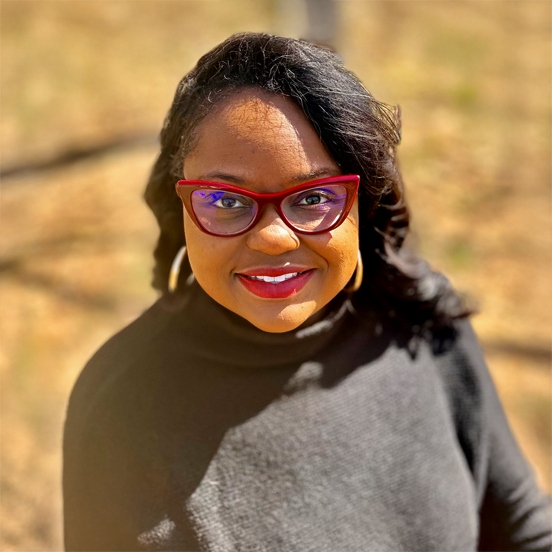
The series identified the urgent need to redress the structural inequalities that cause Black women of all socio-economic backgrounds to experience worse health status than white women do, and to address the deficiencies in U.S. health systems that make these disparities deadly.
The historical dismantling of the U.S. Black healthcare workforce
Birthing While Black begins by examining the historic roots of the problem, which help explain why today, fewer than 7 % of nurse-midwives in the US are Black. Black people make up 13.7% of the US population, so in a fair world, one could expect a corresponding percentage of Black women working as nurse-midwives, especially since one of five Black women in the labor marketis working in the healthcare sector. But Black women in the health sector “are significantly overrepresented in lower-paying, more insecure positions such as long-term care jobs (40%) and health aides (28%) and underrepresented in higher-paying, more secure positions such as physicians (4%), nurse practitioners (7%), and registered nurses (12%).”
It’s a disheartening history. Each time I think I’ve learned all there is to know about how poorly the U.S. has treated Black folks, I find out something worse.
The occupational segregation of Black health workers in the U.S. originated in the 19th century. As modern medicine developed, white male physicians saw the potential benefits of controlling the field that became obstetrics and gynecology, where lay female practitioners had been dominant. They drove out lay midwives across the country. In the U.S. South, this particularly affected Black midwives and healers, who had traditionally overseen pregnancy and childbirth for their own communities and for the families of their enslavers.
At the same time, white physicians began a campaign against Black physicians. Large foundations supported this change in the name of improving medical and nursing standards. In a recent article in the philanthropy magazine Alliance, Healthcare executive Georgina Dukes-Harris recounts how, between 1913 and 1929, the Rockefeller Foundation poured millions into the movement for reform of medical education that followed the 1910 publication of the (Carnegie Foundation-funded) Flexner Report. But the Flexner recommendations and the financial help that followed weren’t neutral: they were deeply racist. For every dollar given to Black medical education, 25 dollars went to white medical schools. Thirteen Black medical schools closed during that period, leaving only Howard University College of Medicine and Meharry Medical College standing. A 2020 JAMA study estimates that more than 35,000 Black physicians weren’t trained as a result. To add insult to injury, from the 1870s to the 1960s, the American Medical Association openly allowed its local and state chapters to refuse to admit Black physicians, depriving many Black physicians of training and networking opportunities, and denying them admitting privileges at local hospitals. Then, in 1921, the federal Sheppard-Towner Act was adopted to promote maternal and infant welfare, allocating $10 million ($181.7 million equivalent today) for maternal care. Its stated purpose included “the regulation and licensure of midwives.” In practice, state-level health departments used that money to dismantle traditional birth work and prohibit Black birth workers from practicing. In addition, under Jim Crow segregation laws, Black women were forbidden from working at white hospitals, leaving licensed Black nurses and midwives with few career options. The results are felt to this day. In the 1920s, more than 42,000 Black midwives practiced across the United States, and 80 percent of Black births in the South were attended by Black midwives; in Mississippi, nearly 90 percent. By 1980, midwives attended barely one percent of American births. Today, over 90 percent of US midwives are white.
It’s an undisputed fact that health providers rooted in the community they serve have superior cultural competency and deliver better health outcomes for their patients. This is especially true for marginalized communities. Black patients in the U.S. report significantly greater rates of disrespectful treatment (spoken rudely to, talked down to, or ignored) during a health visit than white patients. According to the Health Policy Institute, “African Americans and other ethnic minorities report less partnership with physicians, less participation in medical decisions, and lower levels of satisfaction with care.”
As Dr Dukes-Harris noted, it’s not a coincidence that “the eight states with the worst maternal death rates are all in the South: Tennessee, Louisiana, Mississippi, Arkansas, Alabama, Georgia, South Carolina, and Kentucky. These are the same states that most aggressively criminalised [Black] midwives. Louisiana’s [maternal mortality ratio] is four times California’s.”
At the same time, white physician and researchers in the US exploited and abused Black bodies in the name of advancing medicine. In particular, “doctors performed cruel and torturous procedures on Black women who did not consent and who would never access the very advances that were being developed on their bodies.” For example, in the 1840s, Dr. James Marion Sims, the so-called father of modern gynecology and a future President of the AMA, “leased” enslaved women in Alabama to perform multiple experimental vaginal surgeries on them. Predictably, this abuse generated a profound mistrust of the (white) medical profession in Black communities, mistrust that persists to this day and that has been shown to disincentivize Black persons from seeking care.
The need for Black birth workers
One of the biggest obstacles to Black maternal health, Dr Free found, continues to be Black women’s lack of access to Black birth workers, such as midwives and doulas. Birthing While Black reports that 66% of Black women would like to be assisted by a Black birth worker. There is therefore an urgent need to redress the harm caused by the systematic exclusion and discrimination of Black health workers over the decades. Being attended by a Black birth worker would help address the deep mistrust highlighted above, for starters.

More Black birth workers would also have significant positive health impact. Access to skilled birth workers (doctors, nurses and nurse-midwives) has been shown all over the world to result in better pregnancy and delivery outcomes, with fewer maternal deaths and fewer complications. But access to the continuous support that doulas offer can further improve these outcomes. Doulas provide non-medical physical, emotional, and informational support to pregnant individuals and families before, during, and after childbirth. Doulas also advocate for their patients’ health decisions and help them navigate the challenges of childbirth. In the U.S., women giving birth with the support of a doula have 47% lower risk of cesarean delivery, a 29% lower risk of preterm birth, and were 46% more likely to attend a postpartum checkup.
A 2017 Cochrane review of 27 trials involving nearly 16,000 women found that , around the world, continuous support by a birth worker (typically, a doula) during childbirth and labor led to “increased spontaneous vaginal birth, shorter duration of labour, and decreased caesarean birth, instrumental vaginal birth, use of any analgesia, use of regional analgesia, low five‐minute Apgar score and negative feelings about childbirth experiences.” These are stunning statistics! However, continuous support has now become the exception in most hospital settings in the U.S.
“We know what we should do, Dr Free noted, but we don’t fund the solutions. We know that women are better heard and supported by people from their own community, and we know birth workers [doulas and midwives] are needed. But we don’t meaningfully integrate birth workers into our hospital systems, and we don’t fund them properly.” In fact, even when health systems try to create pathways for birth workers to be integrated, low reimbursement rates, cumbersome paperwork and expensive certifications are often the norm, blocking meaningful change.
“There are current efforts to use Medicaid for doula care in a number of states,” said Dr Free. But in many places, doulas are reimbursed $25 for a visit that should pay $100, and they have to spend 15 hours a week filling forms to obtain that reimbursement. This is time they should be spending in care.”
Moreover, these efforts will likely face serious headwinds when federal Medicaid cuts included in the 2025 federal budget law (Trump’s so-called One Big Beautiful Budget Act or OBBBA) begin to apply in January 2027, as I outlined in a recent Newsletter. Medicaid is the joint federal-state health insurance programs for low-income adults, pregnant persons and persons with disabilities in the U.S. It currently has nearly 69 million enrollees, 18.5% of whom are Black.
The collision of three crises
Dr Free and I then discussed what the Birthing While Black series calls a “collision of crises,” namely, the combined impact of increasing privatization and consolidation in the U.S. health sector; growing abortion restrictions; and diminishing public funding for reproductive health.
The first of the three crises, consolidation and privatization of healthcare, is behind the phenomenon known as “maternal or obstetric deserts,” which affects all parts of the U.S. but especially rural communities. All over the U.S., maternity wards and obstetric departments are closing at an alarming rate: “Today, over a third of US counties lack an obstetric clinician. A recent study of nearly 5,000 acute-care hospitals found that between 2010–2022, the share of facilities without obstetric services rose from 35 percent to 42 percent. During that time, 537 hospitals eliminated obstetric care, and as of 2022, 52 percent of rural hospitals—and 36 percent of urban hospitals—did not have any obstetric services.”
“This erosion of maternal health systems is a huge concern. There have been many closures in the last two or three years,” Dr Free told me. “In many places, there is no obstetrician within a 30-mile radius, and those that remain have to see more and more patients. The system is overwhelmed. This affects low-income persons most dramatically. We can’t assume that everyone has the ability to drive to a medical office, or that everyone owns a car.”

Lack of or delayed prenatal care has immediate impact for pregnant persons, especially those with high blood pressure and diabetes (sometimes undiagnosed). They face dangerous, often life-threatening complications in pregnancy and during childbirth, such as preterm labor, pre-eclampsia and eclampsia [extreme high blood pressure], placental abruption [separation] and still-births. According to American Heart Association statistics, 58% of Black women in the U.S. have high blood pressure, as compared to 43% of white women, 38% of Asian women and 35% of Hispanic women.Meanwhile, the need for specialty physicians has only increased: “More women over 40 are having babies. We need more fetal medicine doctors than ever, but they’re simply non-existent. So, what do these women do? Can they afford to travel and pay out of pocket for these services? Often, they can’t,” said Dr Free.
Dr Free sees this trend as intentional: “this consolidation, this privatization, these low health insurance reimbursements rates, these are not accidental, this is not happenstance. This is our health care system as it has been designed to work.” In that context, Dr Free and I discussed the shocking rates of medical complications experienced by Black women during pregnancy and childbirth (preeclampsia, which Black women are 60 percent more likely than white women to develop, and roughly five times more likely to die from; postpartum cardiomyopathy, the leading cause of late maternal deaths, which Black women are six times more likely than white women to experience, and pregnancy-associated hemorrhage, which Black women are twice as likely as white women to die from). The higher hypertension experienced by Black people in the U.S. is increasingly understood to be caused by the structural racism and environmental conditions faced by them, rather than by inherent genetic traits. In a recent American Heart Association report on Black women's cardiovascular health, Dr. Michelle A. Albert, the Walter A. Haas-Lucie Stern Endowed Chair in Cardiology and professor of medicine at the University of California, San Francisco, stated: "An understudied component is the cumulative impact of multiple psychosocial stressors that likely disproportionately affect Black women compared to women from other racial and ethnic groups regardless of socioeconomic status," Albert said. "The impact of these stressors also likely will affect the ability of Black women to receive and maintain holistic care."
Dr Free agreed with this analysis. She noted that chronic stress is closely linked to hypertension, which is at the root of many of these complications. “You can’t separate clinical issues like these from the context in which Black women live and work.”
For example, Birthing While Black found that the work conditions experienced by Black women, particularly but not only in the health sector, where they are overrepresented in low-wage, non-unionized, insecure and high-risk positions (“high demand, low control, low support”), are correlated to high levels of stress.
“Many of these low wage health workers have few or no benefits. They’re not unionized. They don’t have workplace health insurance, they don’t have paid leave,” said Dr Free. “You have a Black woman working in the healthcare system, but she can’t access the same health care system that she works in. That’s a reality.” Think about that!
The second crisis, that of stricter abortion restrictions, has only mushroomed since the Supreme Court’s 2022 Dobbs decision rescinding the right to abortion. OB-GYNs (obstetricians-gynecologists) are leaving the most restrictive states, where Black maternal mortality is already higher or highest. “OB-GYNS don’t want to practice where they can’t offer the procedures that are the standard of care,” explained Dr Free. Birthing While Black reports that “between 2022 and 2024, 76 independent abortion clinics closed, not only eliminating access to abortion care but also the full spectrum of sexual and reproductive health care that is increasingly difficult for women to find elsewhere.”
Meanwhile, the American College of Obstetricians-Gynecologists (ACOG) conducted a survey of nearly 500 medical students across specialties. It found that “close to 60 percent of respondents reported being unlikely to apply for residency in a state with abortion restrictions.” You read that correctly: a growing number of medical students across all disciplines (and not only future OB-GYNS) say they wouldn’t practice medicine in abortion restrictive states.
Finally, Dr Free pointed to the ongoing attacks on publicly funded contraceptives services, notably on the family planning program known as Title X, and their “massive impact” on Black women’s reproductive health and autonomy.
These attacks have been going on for a while. “Red” states such as Texas began, after the 2010 mid-term elections, to cut funding for family planning clinics. Texas-funded clinics went from serving 212,000 patients in 2010 to roughly 47,000 in 2013. Then, in 2019, the Trump administration imposed major changes on Title X, the 50-year old federal program that has funded contraceptive services for low-income persons (cf. the September 2025 Famous Feminist Newsletter).
Title X clinics were suddenly prohibited from providing referrals for abortion and from sharing facilities with clinics that offer abortions, while Title X funding was redirected to anti-abortion organizations. As a result, more than 400 Planned Parenthood clinics and roughly 900 other providers—nearly one in three Title X clinics—left the program, which went from serving 3.9 million patients in 2018 to 1.5 million in 2020, a dramatic drop-off. “You have to remember that, historically, Title X has been underfunded by a factor of 3 to 4 times. Then to cut it this already underfunded program… it’s hugely detrimental,” noted Dr Free. 24 % of Black women of reproductive age rely on Title X clinics for sexual and reproductive health, one in three Black women of reproductive age is registered with Medicaid, and 40% of all births in the U.S. are currently covered by Medicaid. “So, these funding cuts to Title X and Medicaid are leaving us very, very concerned!”
Dr Free noted that Title X funds are now being redirected to religious-based “crisis pregnancy centers” that dissuade pregnant women from having abortions, but provide no reproductive health services. This will cause harm very soon, “beginning this year, in 2026.” Add to that the severe Medicaid cuts referenced above.
These three crises create a perfect storm for everyone’s sexual and reproductive health, but especially for the sexual and reproductive health of Black women.
Maternal health research goes dark under Trump
Oh, and that’s not all! The reason we know about disproportionate Black maternal mortality is because the U.S. had, until recently, a workable if imperfect maternal health data collection system.
Now, under the Trump Administration, maternal health research has “gone dark.” As described in Birthing While Black: “The current administration has taken direct aim at surveillance and research on women’s pregnancy-related deaths by banning from its grant-making processes the very language used to describe those deaths. As of May 2025, the administration has urged federal employees to not approve any grants that include the words women, Black, minority, race, LGBTQ, trans, bias, abortion, science-based, barrier, cultural sensitivity, discrimination, equity, gender- based violence, health disparity, and injustice, among hundreds of others.” That’s right – the federal government will no longer pay to collect data about any of these topics going forward.
Meanwhile, the Centers for Disease Control and Research (CDC), which has hosted maternal health data bases such as the Pregnancy Risk Assessment Monitoring System (PRAMS) and the Pregnancy Mortality Surveillance System (PMSS), have axed both, firing all staff and stopping data analysis. “As a result, the CDC has not published any recent briefs, and it is unclear what is happening with pregnancy-related death information from 2023–2024.”
For their part, restrictive abortion states like Texas and Georgia have suspended or reorganized their own Maternal Mortality Review Committees (MMRCs)−the state-level committees of experts that review every pregnancy-related death, and that have usually provided some of the best information available. Georgia fired all 32 members of its MMRC in 2024, and won’t reveal the names of the new members, while the Texas MMRC stopped reviewing pregnancy-related deaths in 2002 and 2023. Why have these states done this? Because their Republican governors were unhappy with news reports of women dying as a result of state abortion bans.
“We can’t trust the data anymore or can count on having publicly accessible data in the future. It’s very scary. They don’t want to be accountable” said Dr Free. Indeed, without research and data, we can’t identify the problems, design solutions or hold those responsible to account. Very grim indeed.
Moving forward
I don’t see how we’re going to address this disaster without going to the heart of the systems that currently harm all U.S. residents, but especially Black women. Black maternal mortality highlights the profound injustices at the core of our overlapping systems, whether in the appalling treatment of our (female, Black, immigrant…) health workforce, the naked profit motive that leaves communities without maternity wards, the far-right attacks on reproductive autonomy, or the dismantling of the already meager financial support offered Black women and their families. We’re going to need a revolution, y’all!
But Dr Free is not losing hope. “Given what’s at stake and what’s on the line, there is NO SPACE for being apathetic and complacent, none whatsoever!” she stated. “Each time we lose a Black woman, we lose a community member, a mother, a primary earner, a caretaker. These deaths have huge implications for their communities and their families.” As Birthing While Black reported, “Due to overlapping disadvantages of racialized poverty and exposure to other harmful social determinants of health, Black children are already more likely than white children to experience the loss of a loved one. Black maternal mortality is another layer of disadvantage that makes Black children vulnerable to a host of unfavorable outcomes.”
We can’t afford to lose one more Black woman, or as they say in Latin America about femicide: “¡Ni una menos!”
Solutions are being put in place at state and city-level. “I’m seeing a strong movement to support midwives and doulas in many communities. We are also increasingly deconstructing maternity care to look at other options than hospital settings. We know we can have better outcomes in different settings, such as community birthing centers, that are friendlier environments. In some progressive [U.S.] states, there is good work being done on community level care. We have to demand it.”
And Dr Free added, “we have to reinstate full access to abortion care in all 50 U.S. states and beyond, expand Medicaid to adequately cover all reproductive health needs and make reimbursements for doula and midwife care easier. And we need Black birth workers, with more pathways to these professions, accessible and affordable training programs, and better work conditions for them.”
Yes, we know what to do, and we have to keep moving forward, even when times are hard. “Don’t give up, don’t stop!” urged Dr Free. “We can all do our part to improve the situation.”
If you’d like to do your part, consider supporting organizations that advance Black maternal health in the U.S., such as the Institute for Women’s Policy Research (IWPR), Sister Song or the Black Mamas Matter Alliance. A luta continua!
In maternal health and reproductive justice solidarity,
FG